
The attic hatch can be a bigger weak point than the insulation around it. With attic air sealing before insulation, seal ceiling gaps first, then weatherstrip and insulate the access panel so it closes against the frame. ENERGY STAR recommends caulk for small holes 1/4 inch or less. The price depends on the case and is given after a quote request; attic size, access, and the amount of sealing work shape it.
Adding insulation over air leaks does not close the pathways themselves. This guide explains what affects attic air-sealing costs, how sealing can support steadier indoor temperatures and help manage moisture, and how to insulate and gasket-seal the attic hatch before adding insulation. It also covers key checks to keep the work focused on gaps, access, and ventilation.
Key Takeaways
- Use a careful attic inspection or blower-door testing to find air leaks around penetrations and framing before insulation hides them.
- ENERGY STAR estimates average heating and cooling cost savings of 15% when homeowners combine air sealing with proper insulation.
- Seal and weatherstrip the attic access, then insulate the panel with at least R-10 rigid foam to reduce drafts at this often-overlooked opening.
- Address moisture and ventilation concerns as part of the work to help protect indoor air quality and reduce conditions that can contribute to mold and mildew.
What Is Attic Air Sealing?
Attic air sealing closes gaps between the conditioned interior and the attic before new insulation covers them. Attic air sealing before insulation helps you find and address leakage paths at the attic floor instead of hiding them beneath insulation.
-
Recognize Signs of Attic Air Leaks
Look for dark or dirty insulation near ceiling openings, plumbing stacks, recessed fixtures, and HVAC ducts. Dust marks can show where moving air has carried particles, which may affect indoor air quality. Drafts near the attic access, uneven room temperatures, and warm air escaping through ceiling gaps are other clues. Note each example before moving or adding insulation.
-
Locate and Prioritize Air Leaks
Inspect the attic floor around light fixtures, wiring, ducts, plumbing, and the access frame. Start with visible openings that connect living areas to the attic, including gaps around utility penetrations. Seal leaks, not intentional attic vents: roof and soffit ventilation paths need to remain open. If you find ventilation problems or moisture, address them before adding insulation.
-
Use Blower-Door Testing to Find Leaks
Blower-door testing can help reveal leakage between the home and attic. The test changes indoor air pressure, making airflow through ceiling gaps easier to detect with a smoke pencil or similar tool. Trace the airflow to its source, then prioritize direct openings between conditioned rooms and the attic floor. Testing can uncover leaks that are difficult to spot visually.
-
Air Seal Attic Penetrations
Clean around each penetration, then apply caulk to gaps 1/4 inch or less, as ENERGY STAR recommends. Use expanding spray foam for gaps from 1/4 inch to 3 inches. Around metal flues, preserve 1 inch of clearance; around masonry chimneys, preserve 2 inches. Use high-temperature-rated caulk or foam near hot components, and never seal attic vents.
What are the potential benefits?
Air sealing before insulation can improve comfort and reduce unwanted heat flow. Keep ventilation paths open and address moisture sources so the work supports healthy indoor air.
-
Consider Energy Savings and Ice-Dam Prevention
Look at air sealing and insulation as one energy upgrade. ENERGY STAR’s energy savings methodology estimates average heating and cooling cost savings of 15% when homeowners combine air sealing with proper insulation. The effect on utility bills depends on heat loss, insulation, and how the home is heated and cooled. In cold weather, warm air escaping through the ceiling can warm roof areas unevenly and contribute to ice dams. Preserve roof ventilation and maintain sound flashing so melting water can drain as intended.
-
Weigh Comfort and Moisture Effects
Notice whether rooms below the attic have drafts or temperature swings. Reducing uncontrolled air movement can help keep indoor temperatures steadier. Before sealing, identify moisture sources such as a bathroom exhaust duct ending in the attic; trapped moisture can encourage mold and mildew. Dampness and airborne particles can affect indoor air quality, a relevant concern for occupants with respiratory sensitivities. Keep ventilation paths open, and make sure exhaust ducts discharge outdoors. For attic conditions that call for professional insulation work, closed cell spray foam insulation may be part of a project-specific plan.
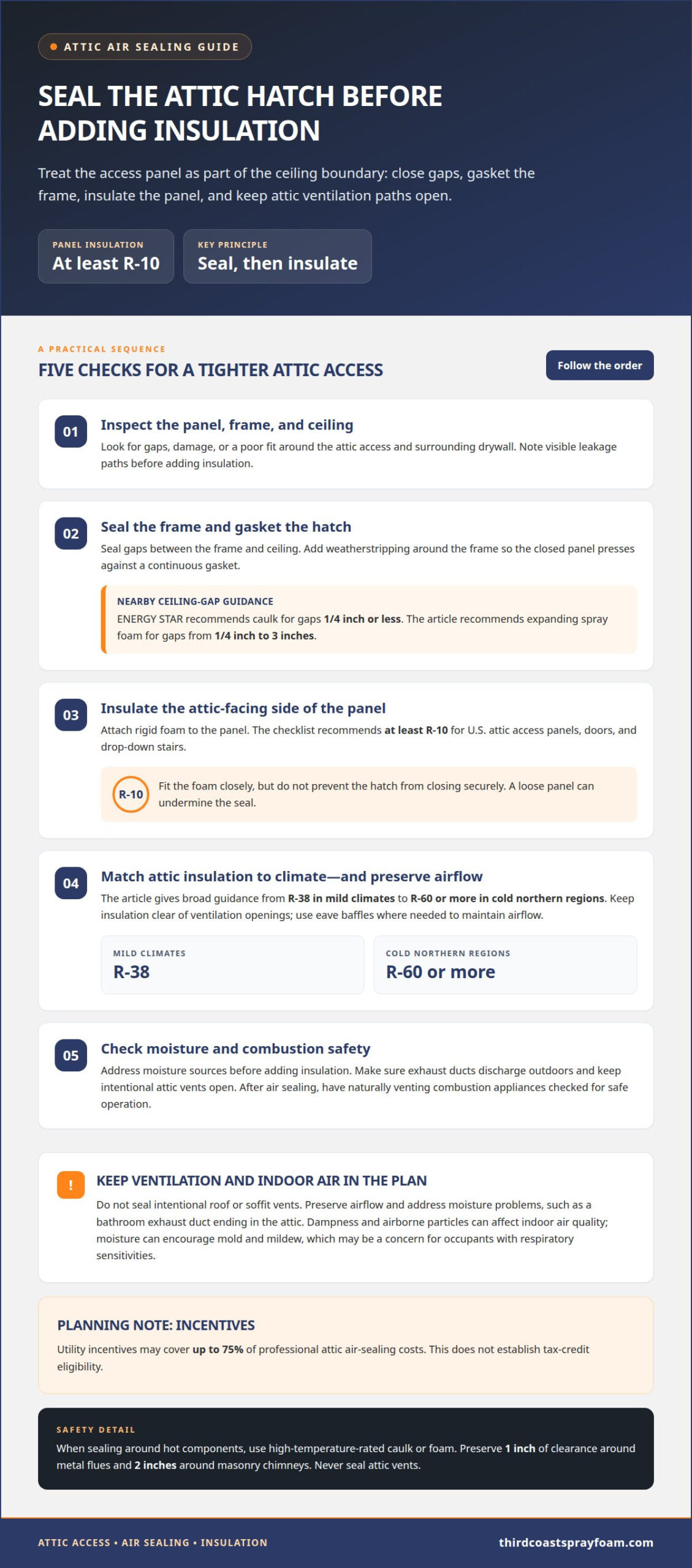
Insulating and gasket-sealing attic access
Treat the attic hatch as part of the ceiling boundary, not an afterthought. Seal the frame, insulate the panel, and preserve ventilation to support comfort and indoor air quality.
- Inspect the access panel, frame, and surrounding drywall for gaps, damage, or a poor fit. Apply weatherstripping around the frame so the closed hatch presses against a continuous gasket. Seal gaps between the frame and ceiling, but do not block soffits or other ventilation paths.
- Attach rigid foam insulation to the attic-facing side of the access panel. The checklist recommends at least R-10 for U.S. attic access panels, doors, and drop-down stairs. Fit the foam closely without preventing the hatch from closing securely; a loose panel can undermine the seal.
- Match the surrounding attic insulation to the home’s climate and assembly. The available range is R-38 in mild climates to R-60 or more in cold northern regions. Keep insulation clear of ventilation openings, and use eave baffles where needed to maintain airflow. Proper ventilation helps control moisture that can contribute to mold and mildew.
- Consider incentives when planning the work. Utility incentives may cover up to 75% of professional attic air-sealing costs; that does not establish tax-credit eligibility. For air sealing and insulation, the recommended R-value varies with climate: the broad guidance ranges from R-38 in mild climates to R-60 or more in cold northern regions.
- After air sealing, have naturally venting combustion appliances checked for safe operation. A professional can assess airflow and combustion safety alongside the attic work. To plan insulation around the hatch and attic boundary, discuss your attic insulation project.
Third Coast Spray Foam: Closed Cell Spray Foam Insulation
Third Coast Spray Foam helps homeowners plan insulation work when attic leaks, comfort concerns, and insulation choices need to be considered together. Closed-cell spray foam may suit parts of a project where the assembly calls for that material; the right approach depends on the space and its conditions. Include ventilation and existing moisture issues in the plan to support indoor air quality and help prevent conditions that encourage mold or mildew.
If attic access, roof geometry, or existing materials make preparation complex, a professional assessment can clarify the next steps before insulation is added. The goal is a well-considered building envelope, not simply covering gaps with more material. Contact Third Coast Spray Foam to discuss your attic insulation project.
Build a Stronger Attic Plan
Planning attic air sealing before insulation is an opportunity to improve how the attic works with the rest of the home. Look beyond a single upgrade: a well-coordinated building envelope supports more consistent comfort, helps protect indoor air quality, and reduces conditions that can encourage mold and mildew. The right sequence also creates a clearer foundation for future home improvements.
Third Coast Spray Foam can help connect insulation choices with your home’s needs. Its services include closed-cell and open-cell spray foam insulation, along with other insulation applications. Considering the attic as part of the whole structure can keep the next steps focused and practical.
Contact Third Coast Spray Foam to talk through your attic insulation project. A thoughtful plan is a solid start toward a more comfortable, healthier home.
Frequently Asked Questions
How Much Does it Cost to Air Seal Your Attic?
Attic air-sealing costs depend on the attic’s size, accessibility, number of leakage points, and preparation required. A clear, open attic with a few accessible gaps has a different scope from one with obstructed areas or insulation that needs removal. For exact project details, Third Coast Spray Foam offers a free, no-obligation estimate. This information reflects the company’s own statements.
Does my home need this project?
Your home may benefit from air sealing if you are planning an insulation upgrade and notice drafts, uneven room temperatures, or visible gaps between the living space and attic. Take a broader look if the attic has moisture concerns, damaged ductwork, or exhaust equipment venting into the space. These conditions affect the work plan and indoor air quality, not just insulation coverage.
Should I do the project myself or hire a contractor?
For spray foam work, choose professional installation rather than a DIY kit. Third Coast Spray Foam cautions that improper application can cause off-gassing or expansion damage, while DIY kits can lead to uneven coverage and health risks. Professional assessment is especially useful when the attic has difficult access, concealed gaps, or nearby combustion equipment that could be affected by airflow changes.
Where are the biggest attic air leaks to seal?
Check the attic access, open chases, plumbing vent openings, ductwork penetrations, and ceiling fixtures. Gaps where interior partitions meet the attic floor can also create leakage paths, especially around dropped ceilings or kneewalls. Focus on openings that connect conditioned rooms directly to the attic, and distinguish them from intentional roof and soffit vents that maintain attic airflow.
How much does professional attic air sealing cost in the U.S.?
There is no single project price for every U.S. attic. The total depends on attic area, access, the number and type of gaps, and whether existing insulation must be removed or disturbed. This information reflects Third Coast Spray Foam’s own statements; a free, no-obligation estimate is required for exact project details.
Disclaimer
Information provided is for general educational purposes. Individual needs and circumstances vary. Speak to an experienced professional to get the correct information for your situation.