
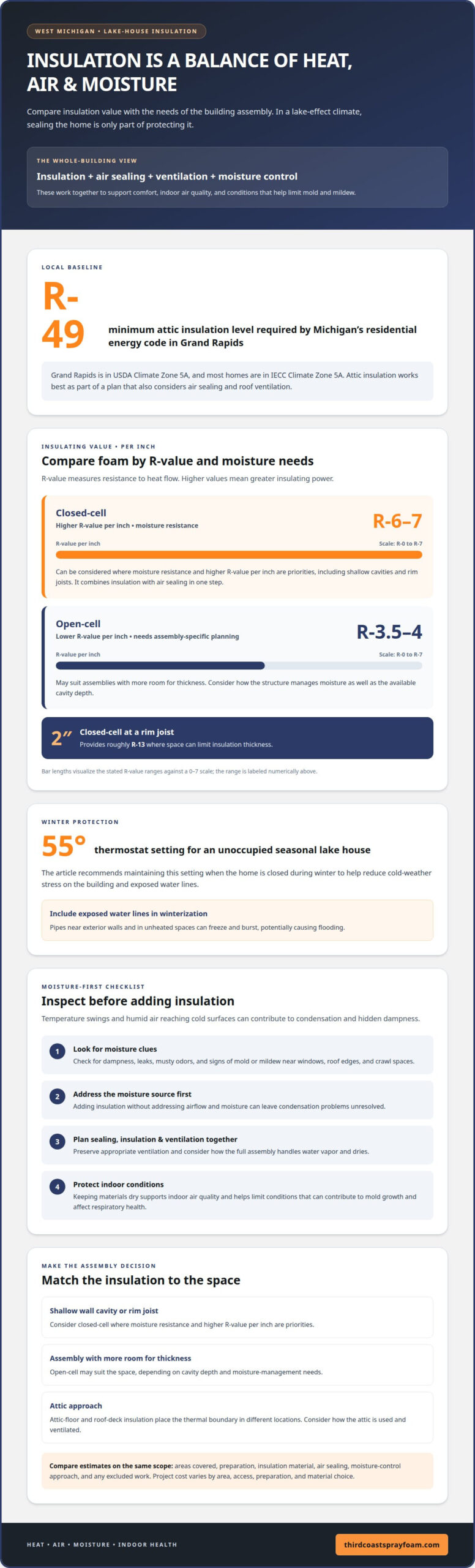
The tightest lake house isn’t automatically the best protected. In Grand Rapids, Michigan’s residential energy code requires a minimum attic insulation level of R-49. Closed-cell spray foam provides about R-6 to R-7 per inch and moisture resistance, while open-cell provides about R-3.5 to R-4 per inch. For insulating a lake house in West Michigan, the right choice depends on the building assembly and how it manages moisture, not just how completely it’s sealed.
It makes sense to want fewer drafts and less winter heat loss. But lake-effect cold, humidity, and rapid temperature changes make ventilation and moisture control important, too. They help protect indoor air quality and limit conditions that can contribute to mold and mildew.
This guide explains what local code requires, how open-cell and closed-cell foam compare, and how West Michigan’s lake climate affects insulation decisions. You’ll get a practical framework for thinking about comfort, air sealing, and moisture as parts of one system.
Key Takeaways
- Grand Rapids’ residential energy code requires a minimum attic insulation level of R-49. The federal 25C insulation credit ended December 31, 2025, according to the Internal Revenue Service.
- Compare open-cell and closed-cell foam by their insulating value and how each suits the specific area of your home.
- Lake-effect cold, humidity, and temperature swings make moisture management important alongside air sealing and insulation.
- Consider how insulation choices affect indoor air quality and help manage conditions that can contribute to mold and mildew.
1. What climate zone is Grand Rapids in, and what does code require?
Grand Rapids is in USDA Climate Zone 5A, and most homes are in IECC Climate Zone 5A. Michigan’s residential energy code requires a minimum attic insulation level of R-49 in Grand Rapids. Attic insulation works best as part of a broader approach that also considers air sealing and roof ventilation.
In winter, heat escaping through a poorly insulated attic can warm the roof and contribute to ice dams, which may lead to leaks and damage. Seal gaps and cracks around attic penetrations to reduce drafts and heat loss, and include roof ventilation in the plan. Adding insulation without addressing airflow and moisture can leave condensation problems unresolved. Attic-floor and roof-deck insulation place the thermal boundary in different locations, so consider how the attic is used and ventilated before choosing an approach.
For a seasonal lake house closed during winter, insulate and seal the attic and other draft-prone areas, while maintaining a 55-degree thermostat setting when the home is unoccupied. That helps reduce cold-weather stress on the building and exposed water lines. An energy audit can identify priorities: a professional assessment, blower door test, and infrared scan can reveal air leaks and poorly insulated areas. Use those findings to plan air sealing and insulation improvements.
Michigan Saves is a possible source of energy-efficiency incentives or financing for homeowners. The federal 25C insulation credit ended December 31, 2025, according to the Internal Revenue Service. Before planning around a credit, distinguish available state incentives from the ended federal credit.
2. Is closed-cell or open-cell spray foam better for West Michigan’s climate?
In Grand Rapids, compare spray foam by R-value per inch, moisture exposure, and available cavity depth. R-value measures resistance to heat flow, so higher values mean greater insulating power. Closed-cell foam provides approximately R-6 to R-7 per inch; open-cell provides approximately R-3.5 to R-4 per inch. Closed-cell also provides moisture resistance and combines insulation with air sealing in one step.
That difference can matter in a shallow wall cavity or rim joist, where space limits insulation thickness. Two inches of closed-cell foam at a rim joist provides roughly R-13. Open-cell foam may suit assemblies with more room for thickness, but the assembly’s moisture-management needs matter too. Neither choice replaces sound ventilation and moisture control.
For lake-house walls, attics, and crawl spaces in West Michigan, match the insulation to the assembly. Consider closed-cell foam when moisture resistance and higher R-value per inch are priorities. Open-cell foam may suit an assembly that can accommodate its lower R-value per inch. The right attic approach also depends on whether the thermal boundary belongs at the attic floor or roof deck.
Spray foam, cellulose, fiberglass, and rigid foam differ in how they fit, seal, and insulate an assembly. Compare the required thickness, air sealing, moisture exposure, and installation needs, since these factors affect performance and project cost. Cost varies by project and is provided with a quote, based on factors such as area, access, preparation, and material choice.
For a rim joist or other area where moisture resistance and air sealing are central, explore closed-cell spray foam insulation as one option for improving the home’s energy performance.
3. Lake-effect cold and moisture in West Michigan
Lake-effect snow forms when cold air crosses the warmer Great Lakes, gathers moisture, and drops snow on leeward shores. The National Weather Service warns of extreme cold and large-scale snow accumulation in the region. This climate makes insulating a lake house in West Michigan a whole-building task, not simply a choice of insulation material.
Rapid temperature swings around Lake Michigan can also cause indoor condensation and moisture buildup. Warm, humid air reaching a cold surface may condense, leaving damp spots behind walls or in attic cavities. When insulating a lake house in West Michigan, consider how air sealing, ventilation, and the assembly’s ability to dry work together.
Start with a moisture inspection before adding insulation. Look for dampness, leaks, musty odors, and signs of mold or mildew near windows, roof edges, and crawl spaces. Address the moisture source first. Then plan insulation and air sealing together while preserving appropriate ventilation. Keeping materials dry supports indoor air quality and helps limit conditions that can contribute to mold growth and affect respiratory health.
Exposed water lines in a lakefront home can freeze and burst, potentially causing flooding. Include pipes near exterior walls and in unheated spaces in the winterization plan. Fiberglass batt insulation may be less effective against moisture without a vapor barrier, so consider how the full wall or floor assembly handles water vapor, not just its insulation value.
For West Michigan lake communities, compare estimates by checking that each covers the same areas, preparation, insulation material, air sealing, and moisture-control approach. Ask for a clear scope showing how walls, attic, and crawl space will be handled, and what work is excluded. To discuss moisture-control priorities for your home, talk through insulation planning.
Third Coast Spray Foam: Closed Cell Spray Foam Insulation
Third Coast Spray Foam can help address West Michigan’s cold and moisture concerns with a focused insulation plan. Closed-cell spray foam is an option for areas where air sealing and moisture resistance matter, including vulnerable rim joists. Open-cell spray foam may suit other assemblies, depending on cavity depth and how the structure manages moisture.
Before adding insulation, address leaks or damp materials and consider ventilation as part of the assembly. Managing moisture helps protect building materials and supports indoor air quality by limiting conditions that can contribute to mold and mildew. Rim joist insulation can also target a draft-prone part of the home.
Contact Third Coast Spray Foam to discuss insulation options for your lake house.
Make your next insulation decision with confidence
A durable insulation plan should fit how you use the property, not just the coldest day on the calendar. When planning to insulate a lake house in West Michigan, consider which spaces need attention first and how maintenance will help preserve indoor comfort. Keeping moisture management, ventilation, and air quality in view helps protect the home and the people spending time in it.
Third Coast Spray Foam installs closed-cell and open-cell spray foam and provides pole barn insulation. Discussing your project’s priorities can help connect them with an appropriate approach, without treating every area as though it needs the same solution.
Contact Third Coast Spray Foam to discuss your lake house insulation project and take a practical next step toward a more comfortable home.
Frequently Asked Questions
Can your home be too tight?
Yes. An airtight home needs planned ventilation so indoor air does not become stale or trap excess moisture. After air sealing, use bathroom and kitchen exhaust fans as intended, and watch for persistent condensation on windows or musty odors. These may signal moisture or ventilation concerns. Address dampness promptly to protect indoor air quality and limit conditions that support mold and mildew.
Is closed-cell or open-cell spray foam better for West Michigan’s climate?
Neither foam type suits every assembly. Choose based on moisture exposure, cavity depth, and the area’s function. Closed-cell foam offers higher R-value per inch and moisture resistance, so it may suit a shallow, moisture-prone space. Open-cell foam can fit interior wall cavities where sound control matters. For roof and wall assemblies, account for drying and ventilation as well as insulation.
What Does Spray Foam Insulation Cost in Grand Rapids?
Spray foam costs depend on the project’s area, access, preparation needs, and material choice. Third Coast Spray Foam offers a free, no-obligation evaluation and quote; exact project details and pricing are provided through that process. Compare the written scope, including the surfaces covered and any preparation work, rather than judging proposals by material names alone.
What climate zone is Grand Rapids in, and what does code require?
Grand Rapids is in Climate Zone 5A, and the residential energy code requires a minimum attic insulation level of R-49. That figure applies to attic insulation, not automatically to every wall, crawl space, or roof assembly. For an older lake house, identify which spaces are heated and how the attic is configured before applying the attic requirement to renovation plans.
Will spray foam insulation help with my high heating bills?
Insulation can reduce heat loss when air leakage or insufficient insulation contributes to high heating demand. For example, if bedrooms above a cold garage feel drafty, inspect the floor assembly and rim joists rather than assuming the attic is the only source. The energy effect depends on which areas are improved and how well the home’s heating system and ventilation work together.
Disclaimer
Information provided is for general educational purposes. Individual needs and circumstances vary. Speak to an experienced professional to get the correct information for your situation.