
Closed-cell spray foam is often a practical starting point for a walk-out basement in Grand Rapids because it provides more R-value per inch and resists moisture. The right choice still depends on the wall assembly and how the space manages moisture. A well-planned insulation approach can help address drafts and damp conditions that affect comfort and indoor air quality.
Choosing insulation is also a budget decision, and the project cost depends on more than the foam type alone. This guide explains how closed-cell and open-cell foam compare in West Michigan’s climate, what affects the cost of a basement project, and why moisture management matters for a healthier, more comfortable home.
Key Takeaways
- Compare closed-cell and open-cell foam by insulation value per inch and how each handles moisture in basement wall assemblies.
- Understand how Grand Rapids’ climate zone and insulation requirements shape decisions for a walk-out basement.
- See which project details affect spray foam costs, including foam type, coverage area, and application depth.
- Learn when closed-cell insulation or rim joist insulation can help address drafts and support a more comfortable basement.
Is closed-cell or open-cell spray foam better for West Michigan’s climate?
For below-grade basement walls, closed-cell foam is often considered for its higher R-value per inch and moisture resistance. The right choice depends on the wall assembly and existing moisture conditions.
Closed-Cell Foam for Basement Walls
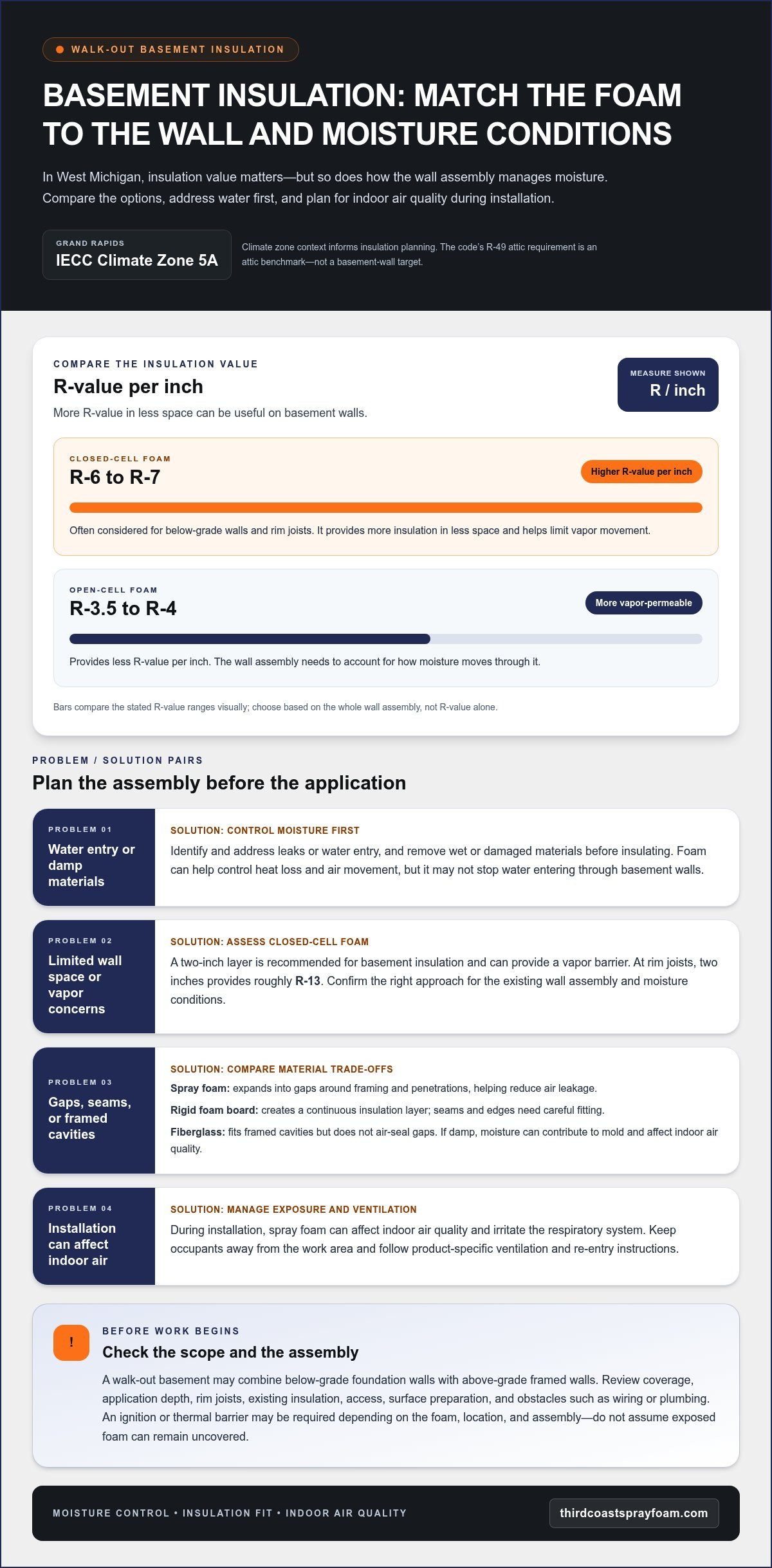
Closed-cell foam suits basement walls and rim joists because it provides more insulation in less space and helps limit vapor movement. A two-inch layer is recommended for basement insulation and can provide a vapor barrier. At rim joists, two inches provides roughly R-13. Before installation, address water entry and remove wet or damaged materials. Foam insulation can help control heat loss and air movement, but it may not address water entering through basement walls.
Open-Cell and Closed-Cell Foam Comparison
Closed-cell foam provides approximately R-6 to R-7 per inch, compared with R-3.5 to R-4 per inch for open-cell foam. That higher R-value and vapor control can suit West Michigan basement walls, where moisture management matters. Open-cell foam offers less R-value per inch and is more vapor-permeable, so the wall assembly must account for how moisture moves. Compare the whole assembly, not just the foam’s R-value.
Basement Insulation Material Options
Spray foam expands into gaps around framing and penetrations, helping reduce air leakage. Rigid foam board can create a continuous insulation layer, but seams and edges need careful fitting. Fiberglass can fit framed cavities, yet it doesn’t air-seal gaps; if it gets damp, moisture can contribute to mold and affect indoor air quality. Prepare walls by identifying leaks, correcting moisture sources, and clearing the surface for application. The federal 25C insulation credit ended on December 31, 2025, according to the Internal Revenue Service. Michigan rebate amounts can change annually, so homeowners should confirm current incentives directly with DTE Energy or Consumers Energy.
What Does Spray Foam Insulation Cost in Grand Rapids?
A basement estimate depends on the area being insulated, foam type, application depth, access, and preparation. The price is determined by the project and provided after a quote request; those factors shape the scope. Grand Rapids is in IECC Climate Zone 5A. Michigan residential energy code requires R-49 attic insulation in this zone, a benchmark for attics rather than a basement-wall target.
Basement spray foam can insulate and air-seal a floor, helping address drafts and cold rooms above a basement. For ceiling work, the estimate should account for joist-bay coverage and obstacles such as ducts, wiring, and fixtures. Sealing around duct penetrations can reduce air leakage, while keeping equipment accessible supports future maintenance.
Pole barns and metal buildings have different assemblies from framed basements. Their insulation plans should account for the structure, exposed surfaces, and moisture movement to help prevent condensation from undermining the enclosure. Foam type, coverage, and preparation all affect the work involved.
An ignition or thermal barrier may be required depending on the foam, its location, and the assembly. Don’t assume exposed foam can remain uncovered. Any protection must suit the installation and applicable requirements.
During installation, spray foam can affect indoor air quality and irritate the respiratory system. Keep occupants away from the work area, and follow product-specific ventilation and re-entry instructions. A Grand Rapids project scope should also identify licensing and insurance documentation, materials, work areas, preparation, and ventilation arrangements. These details help clarify what the estimate covers and how the work will be managed.
Spray foam costs in Grand Rapids
A useful estimate for a Grand Rapids walk-out basement starts with the surfaces to be insulated. Wall area, rim joists, foam type, application depth, access, and preparation all affect the scope. Ask for these elements to be itemized so you can see what the proposed coverage includes.
Spray foam is commonly priced by board foot, so compare quotes using the same coverage and thickness. Open-cell and closed-cell foam have different material requirements, and closed-cell foam generally costs more per board foot. Quotes are not directly comparable if one covers basement walls and another includes only selected sections.
Walk-out basements often combine below-grade foundation walls with above-grade framed walls. On a sloped lot, for example, one wall may be exposed while the others remain against soil. This can affect access, surface preparation, and the insulation approach. Rim joists are another distinct area, with framing bays and penetrations that require careful coverage.
Before accepting an estimate, check that it describes the foam type, coverage area, depth, and treatment of rim joists. Confirm how the scope handles existing insulation, surface preparation, and obstacles such as wiring or plumbing. These details make estimates easier to compare than headline totals alone.
For a clear project scope, request a spray foam quote that reflects your basement’s walls, rim joists, and access conditions. A precise description helps connect the proposed work to the home’s comfort and moisture-management needs.
Third Coast Spray Foam: Closed Cell Spray Foam Insulation
Third Coast Spray Foam helps Grand Rapids homeowners address heat loss and air leakage with closed-cell insulation for basement walls and rim joists. This may suit spaces with drafts, cold surfaces, or moisture concerns around the basement’s thermal boundary. Before insulating, address water entry and assess existing materials: foam does not replace moisture control. Managing dampness helps reduce conditions that support mold and protect indoor air quality.
Walk-out basements can combine exposed framed walls with below-grade foundation walls, so the insulation plan should account for each surface. Open-cell foam may suit other parts of a home, while closed-cell foam is often considered for basement assemblies. The right application depends on the structure and each area’s role in the building envelope.
For a project-specific discussion of basement insulation, contact Third Coast Spray Foam or visit thirdcoastsprayfoam.com.
Plan the Next Step for Your Basement
Before moving ahead, note where the basement feels drafty, where dampness appears, and which walls you may finish later. These observations help focus the project discussion on your actual space, rather than treating every wall and joist bay alike. For spray foam in a Grand Rapids walk-out basement, a clear scope can align insulation decisions with comfort, moisture management, and future use.
Think of the basement as part of the home’s full enclosure. Addressing insulation alongside moisture concerns can support a more comfortable space and help protect indoor air quality. If you’re ready to discuss the conditions in your home and possible next steps, contact Third Coast Spray Foam. A well-considered plan is a solid start toward a basement that feels more comfortable year-round.
Frequently Asked Questions
Will spray foam insulation help with my high heating bills?
Spray foam can reduce heat loss where air leaks or underinsulated surfaces make the heating system work harder. Drafts near basement rim joists, for example, may point to gaps worth addressing. Utility bills also depend on heating equipment, thermostat settings, windows, and other parts of the home. Insulation can support comfort, but it does not guarantee a specific bill reduction.
What spray foam insulation is best for a walk-out basement in Grand Rapids, Michigan?
Closed-cell foam is often a suitable choice for a walk-out basement in Grand Rapids, especially where higher insulation value per inch and moisture resistance matter. Exposed framed walls and below-grade foundation walls can have different needs. Consider existing dampness and planned interior layers before insulating, so the approach suits the complete wall assembly.
What is the average cost of spray foam insulation for a Grand Rapids basement?
There isn’t one useful average for every project. A quote for spray foam in a Grand Rapids walk-out basement depends on the area, foam type, application depth, access, and preparation. A small rim-joist project differs from full wall coverage, so compare the exact surfaces and work included. The project price is provided after a quote request.
How much does spray foam cost per square foot in Grand Rapids, MI?
For basement work, square-foot pricing depends on foam type, depth, coverage, and the wall or ceiling assembly. A walk-out design may combine exposed framed sections with foundation walls, so area alone does not capture the full scope. Compare estimates by matching the surfaces and application details. Third Coast Spray Foam provides a free, no-obligation quote for exact project details.
What Michigan building code and energy requirements apply to basement spray foam insulation?
Grand Rapids is in IECC Climate Zone 5A. Michigan residential energy code requires R-49 attic insulation in this zone, but that attic value isn’t a basement-wall requirement. Basement assemblies also involve moisture management and protection for foam in its installed location. For example, a wall planned for finishing needs its complete assembly considered, not just the insulation layer.
Disclaimer
Information provided is for general educational purposes. Individual needs and circumstances vary. Speak to an experienced professional to get the correct information for your situation.