
Soaked insulation may need to be removed, not just dried. Stop the leak first, then address the wet material within 48 hours of discovering the problem. Knowing what to do after insulation gets wet also means considering what the water touched and whether the insulation can dry fully.
It’s understandable to hope damp insulation will simply dry out, but trapped moisture can reduce its performance and create conditions for mold and mildew. This guide explains what wet loft insulation can mean, how to recognize potential risks to indoor air quality and respiratory health, and when soaked insulation may need to be removed.
You’ll learn why insulation type and the extent of water damage matter, what to consider when deciding whether material can dry in place, and why addressing the moisture source is essential before repairs. The goal is a clear path toward a dry, sound home.
Key Takeaways
- Wet cellulose can absorb moisture, compact, and leave parts of a cavity less insulated. A small affected patch may be handled separately from a larger saturated area.
- Moisture trapped in insulation and nearby materials can contribute to mold, mildew, musty odors, and poorer indoor air quality. Mold or mildew may grow in wet cellulose within a few days.
- Water quality and how thoroughly the insulation is soaked help determine whether removal is needed. Contaminated water calls for removing and replacing affected insulation.
- After damaged material is removed, the surrounding cavity and remaining insulation still matter. Look for lingering dampness, settling, or signs of mold before considering the job complete.
What happens if loft insulation gets wet?
Wet insulation can lose effectiveness as water fills its air spaces. Stop the leak and begin drying or removal within 48 hours of discovering it.
Drying Times by Insulation Material
Drying time depends on the insulation material and how much water it holds. Slightly damp fiberglass batts may dry in a few days; removable wet insulation may take ten days or longer to dry when laid out. Cellulose absorbs moisture like a sponge, making it harder to dry completely. These differences matter because insulation that remains damp can lose performance and support mold growth.
Drying or Replacing Wet Insulation
Deciding whether to dry or replace wet insulation means assessing its material, saturation, and condition afterward. Wet cellulose loose-fill is difficult to dry fully and can break down, so replace it when broadly soaked; a small wet area may be dried or replaced separately. Slightly damp fiberglass batts can dry with fans or a dehumidifier. Homeowners insurance coverage depends on policy terms and the cause of the water damage, so review your water-damage provisions.
Clean Water Exposure and Area Sanitizing
After exposure to clean water, such as rain or condensation, fiberglass insulation may dry in place if it retains its original thickness. Once fully dry, it may regain its original performance. Clean and sanitize the affected area to help prevent mold growth, and check nearby surfaces for lingering moisture. Local building-code requirements depend on the jurisdiction and scope of repairs; the local building department can explain which requirements apply to replacement work.
Hiring Restoration or Insulation Professionals
A restoration or insulation professional can assess hidden moisture, damaged material, and the surrounding cavity. Get professional help if insulation is soaked, has stayed wet for several days, or the leak timing is unknown and moisture is evident. Wet insulation inside a wall cavity may require opening the wall and drying the space with specialized equipment. A thorough assessment can also identify mold, settling, or damage that could affect indoor air quality and respiratory health.
Mold and mildew risks
Moisture trapped in insulation can affect nearby surfaces and indoor air. The risk depends on how long materials remain wet and whether the water carried contaminants.
Contaminated Water and Mold Risks
Dirty water can leave contaminants behind as it evaporates, creating conditions for mold or mildew to grow. Residue may also cause persistent odors, even after visible water is gone.
Insulation can stay damp inside walls or ceilings while connected materials retain moisture. If water was contaminated, remove and replace the affected insulation rather than treating it like exposure to clean rainwater. Check adjacent surfaces too, since contamination and odors can extend beyond the visibly wet area.
Mold, Mildew, and Wood Rot
Wet cellulose can encourage mold and mildew growth within a few days, while saturated nearby wood can begin to deteriorate. Cellulose may resist mold on its own, but moisture trapped against timber can still create conditions for mold growth and wood rot.
Wet insulation can also spread mold spores into indoor air, affecting air quality and potentially aggravating respiratory concerns. Look for musty odors, visible growth, damp wood, or moisture trapped between spray foam and framing. Hidden water in these spaces can cause rot before damage becomes obvious from the room.
For persistent moisture in a crawl space, crawl space encapsulation can help address the area as part of a broader moisture-control approach.
Removing soaked insulation
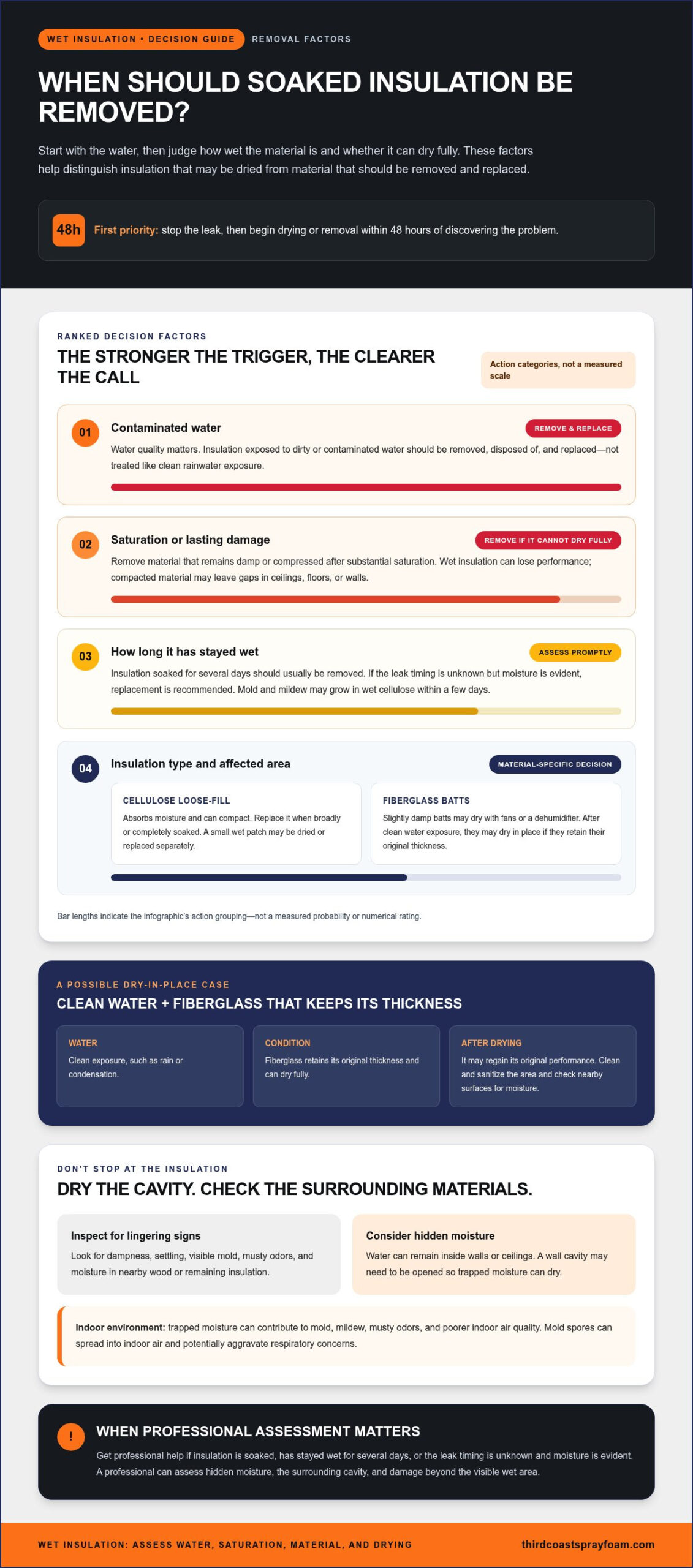
Remove insulation when saturation prevents it from drying fully or leaves it compacted and damaged. First stop the moisture source, such as a roof or plumbing leak, so replacement material isn’t exposed to the same water. Insulation soaked for several days should usually be removed. The key is to address both the wet material and the cause before closing the space.
Cellulose loose-fill can absorb water like a sponge. If completely soaked, remove it so the cavity can dry more quickly. A small wet patch may be dried or replaced separately, while widespread saturation calls for removing the affected area. Wet cellulose can settle and compact, leaving gaps in ceilings, floors, or walls and reducing insulation effectiveness.
Water quality matters too. Remove, dispose of, and replace insulation exposed to contaminated water. If the leak timing is unknown but moisture is evident, replacement is recommended. For fiberglass, assess whether it can dry fully and regain its original thickness. Material that remains damp or compressed after substantial saturation should be replaced rather than covered with new insulation.
After removal, dry the cavity and inspect nearby wood and remaining insulation for moisture, mold, settling, or other damage. Hidden dampness can delay drying and create conditions for mold growth. Wall cavities may need to be opened so dry air can reach trapped moisture. A professional inspection can identify damage beyond the visible wet area and help protect indoor air quality. For affected insulation that needs removal, arrange professional insulation removal before installing replacement material.
Third Coast Spray Foam: Closed Cell Spray Foam Insulation
Third Coast Spray Foam installs closed-cell spray foam for projects where a moisture-resistant insulation option is appropriate. Closed-cell foam doesn’t absorb water like some other insulation materials, but it isn’t a substitute for fixing leaks or removing soaked, damaged insulation.
Consider this option after addressing the moisture source and drying the affected area. A sound, dry building assembly helps protect structural materials and maintain indoor air quality. The right insulation also depends on the space and project needs; Open Cell Spray Foam Insulation, Pole Barn Insulation, and Rim Joist Insulation are options for different applications.
For an assessment of insulation options after water damage, contact Third Coast Spray Foam or visit thirdcoastsprayfoam.com.
Build a Drier, Healthier Home From Here
Knowing what to do after insulation gets wet can shape more than a repair. Use the work as an opportunity to consider how moisture moves through your home and whether the insulation plan supports lasting comfort. A dry, well-maintained indoor environment also matters for air quality and respiratory well-being, especially when mold or mildew is a concern.
The next step is to match insulation choices to the space and its conditions, while making moisture control part of the overall plan. This approach helps protect the structure and supports a healthier home over time.
For guidance on insulation options for your project, contact Third Coast Spray Foam. A practical conversation can help you decide what to address next and move forward with confidence.
Frequently Asked Questions
Does Wet Insulation Need to be Replaced?
Not always. The decision depends on the material and whether it returns to its original condition after drying. Fiberglass exposed to clean rainwater may remain usable if it dries fully and keeps its thickness. Insulation that remains compressed, smells musty, or has been exposed to contaminated water should be removed and replaced. Check nearby materials too, not just the insulation.
Can Fibreglass Insulation Get Wet?
Yes, fiberglass insulation can get wet, even though its fibers don’t absorb water like cellulose. Moisture can fill the air spaces that help insulation resist heat flow, reducing performance while the material is wet. If a roof leak dampens one section, compare its thickness and condition with nearby dry material after it dries. Persistent dampness or compression may mean it won’t regain its effectiveness.
Does Spray Foam Absorb Water?
Closed-cell spray foam is moisture-resistant and doesn’t absorb water like some other insulation materials. Open-cell spray foam is less water-resistant and may retain moisture after exposure. If water reaches spray foam, assess the adjacent framing too: moisture trapped between foam and wood can hide damage. Both the foam type and the condition of surrounding surfaces matter when evaluating the affected area.
How to dispose of wet insulation?
Remove contaminated or unsalvageable insulation from the affected area and keep it separate from material that remains dry. Contaminated insulation should be disposed of and replaced, not left in a cavity. Avoid shaking or scattering damp material indoors, since debris and residues can affect indoor air quality. For large amounts or material hidden in cavities, professional removal can help limit disturbance.
What should you do immediately after home insulation gets wet?
A practical plan for what to do after insulation gets wet starts with stopping the water source and noting which rooms or building spaces may be affected. Record whether water reached walls, ceilings, or floors, and identify the insulation type if visible. If you’re documenting damage for an insurance claim, photographs of the leak source and affected areas can support your records.
Knowing what to do after insulation gets wet also means tracking dampness beyond the visible area. Note musty odors, changes in indoor air, or signs of moisture on nearby wood, then include those observations when arranging an assessment. This record helps establish the extent of the problem and gives repair decisions a clearer starting point.
Disclaimer
Information provided is for general educational purposes. Individual needs and circumstances vary. Speak to an experienced professional to get the correct information for your situation.