Planning a project with mid michigan spray foam starts with two practical questions: does the service area include your community, and which insulation approach suits your building? Third Coast Spray Foam is based in Fruitport and serves West Michigan from the Lakeshore to Lansing. Its listed communities include Lansing, Grand Rapids, Muskegon, Holland, Allegan, Grand Haven, Kalamazoo, and Traverse City.
It’s also reasonable to consider how insulation work relates to moisture, mold, indoor air quality, and respiratory comfort. This guide explains the company’s service area and professional offerings, including spray foam installation, pole barn insulation, crawl space encapsulation, and insulation removal. It also explains why professional application matters: improper installation can cause off-gassing or expansion damage. Moisture-aware insulation can support better indoor conditions, but it isn’t a substitute for mold remediation or a guarantee of respiratory-health outcomes. This information is based on the company’s statements. A free, no-obligation evaluation and quote provides exact project details.
Key Takeaways
- Choose between open-cell and closed-cell foam based on the building area, insulation goals, and moisture considerations.
- Understand how moisture control and professional application relate to indoor air quality, mold concerns, and respiratory comfort.
- Explore mid michigan spray foam service from Third Coast Spray Foam in listed communities including Lansing, Grand Rapids, Muskegon, Holland, Allegan, Grand Haven, and Kalamazoo.
- Compare insulation options for homes, businesses, agricultural buildings, metal shops, pole barns, and specialty projects.
Mid Michigan Spray Foam: What to Know Before Planning a Project
Planning insulation in Michigan starts with the building’s use, the areas that need attention, and how air and moisture move through the structure. Spray foam is professionally applied to insulate and help seal gaps in a building envelope. That air-sealing role can matter through Michigan’s seasonal temperature swings. Gaps and poorly insulated areas can affect comfort and may contribute to moisture concerns when warm, humid air meets cooler surfaces.
Before choosing a material, identify where insulation is needed and whether the project involves a home, business, pole barn, metal shop, or another structure. Closed-cell foam is denser and moisture-resistant, while open-cell foam is lighter and flexible. A project evaluation can help connect the foam type and application to the building’s needs. For general background, see the Spray foam insulation overview.
For a visual introduction, watch this video:
What does mid michigan spray foam service mean for your project?
“Mid Michigan” is a useful regional search phrase, while Third Coast Spray Foam describes its service area across the region from the Lakeshore to Lansing. Listed communities include Lansing, Grand Rapids, Muskegon, Holland, Allegan, Grand Haven, Kalamazoo, and Traverse City. If you’re planning mid michigan spray foam, note the property’s town and the area you want insulated, such as a home, pole barn, or metal shop. A free, no-obligation evaluation and quote can provide details for your specific project.
Professional application is essential because improper installation can cause off-gassing or expansion damage. Spray foam installation requires licensed technicians. During planning, discuss the building’s use and any moisture or indoor-air concerns. Sound installation and moisture-aware planning can support indoor air quality, but foam isn’t mold remediation and can’t guarantee respiratory-health outcomes.
Spray Foam Insulation, Indoor Air Quality, and Professional Installation
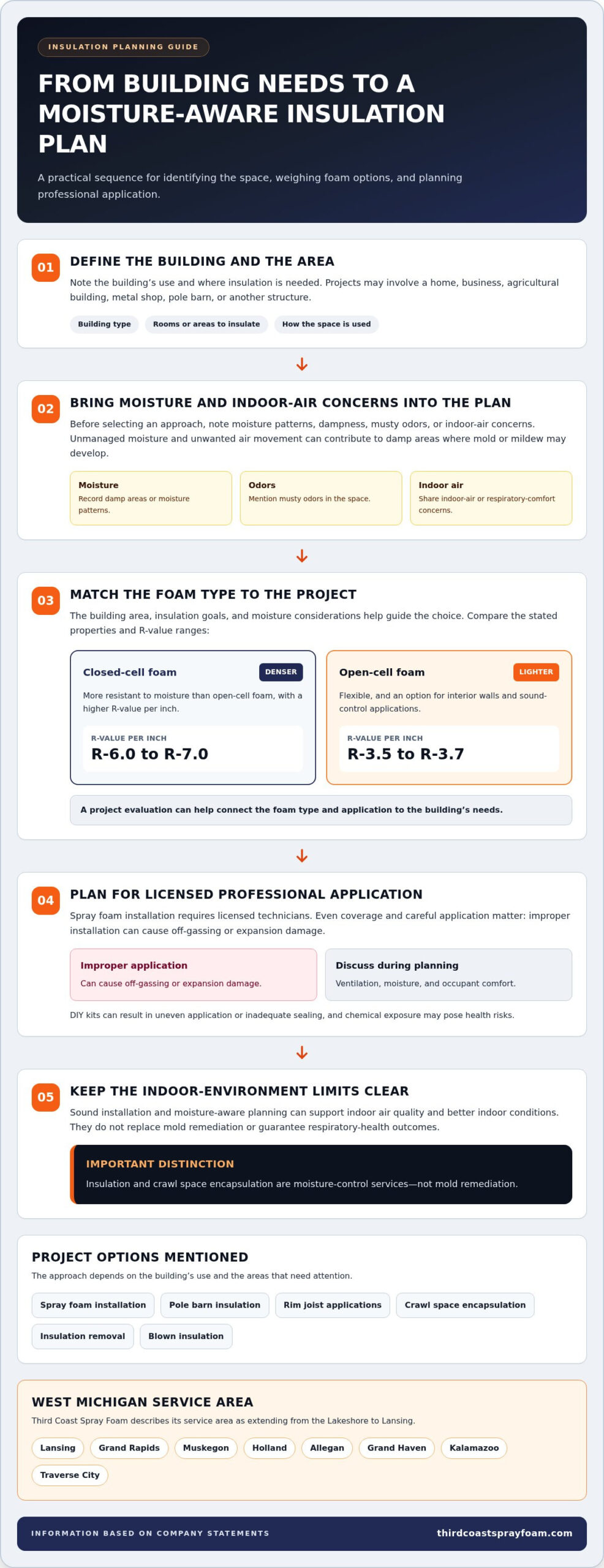
Foam type affects how insulation performs in a wall or other enclosed space. Closed-cell foam is denser and more resistant to moisture than open-cell foam, with a higher R-value per inch. Typical ranges are R-6.0 to R-7.0 per inch for closed-cell foam and R-3.5 to R-3.7 for open-cell foam. Open-cell foam is lighter and flexible, making it an option for interior walls and sound-control applications. The building area, insulation goals, and moisture considerations help guide the choice.
Insulation and air sealing also relate to indoor conditions. Unwanted air movement and unmanaged moisture can contribute to damp areas where mold or mildew may develop. During project planning, note any moisture patterns, musty odors, or indoor-air concerns. Crawl space encapsulation is another moisture-control service Third Coast Spray Foam provides. Insulation and encapsulation can support better indoor conditions, but they are not mold remediation and cannot promise a particular respiratory-health outcome.
Why professional spray foam application matters indoors
Improper spray foam application can cause off-gassing or expansion damage. Installation by licensed technicians is required because even coverage and careful application matter. DIY kits can result in uneven application or inadequate sealing, and chemical exposure may pose health risks. These problems can affect the building and indoor environment. Discuss ventilation, moisture, and occupant comfort as part of the professional evaluation.
For a mid michigan spray foam project, describe how the space is used and mention any dampness or indoor-air concerns. That information helps shape an insulation plan around the building rather than relying on a one-size-fits-all choice. A free, no-obligation project evaluation can clarify the appropriate approach and quote for your property.
Mid Michigan Spray Foam Coverage and Your Next Step
Third Coast Spray Foam serves West Michigan from the Lakeshore to Lansing. Its listed communities include Lansing, Grand Rapids, Muskegon, Holland, Allegan, Grand Haven, Kalamazoo, and Traverse City. These locations give homeowners and building owners a clear starting point when planning mid michigan spray foam.
The company serves residential and commercial properties, as well as agricultural buildings, metal shops, pole barns, and specialty projects. Options include closed-cell and open-cell spray foam, pole barn insulation, rim joist applications, crawl space encapsulation, insulation removal, and blown insulation. The right approach depends on the building’s use and the areas that need attention. For a closer look at one option for local buildings, explore this West Michigan closed-cell spray foam guide.
Request a local evaluation for your insulation project
A search for mid michigan spray foam can help you find relevant options, but building details are what shape the project plan. Before an evaluation, note which rooms or structures feel uncomfortable, where you’ve noticed dampness or musty odors, and whether indoor air quality or respiratory comfort is a concern. Also identify the building type and the areas you want insulated. These details help focus the discussion on air sealing, moisture, and appropriate insulation options.
Information about Third Coast Spray Foam’s services and locations is based on the company’s statements. A free, no-obligation evaluation and transparent quote can provide exact project details and a scope suited to your property.
Make Your Next Insulation Decision With Confidence
Turn general concerns into a clear project brief. Note which rooms or structures feel uncomfortable, where you’ve noticed dampness or musty odors, and whether indoor air quality or respiratory comfort is a concern. These observations can help guide an evaluation, though insulation is not mold remediation and cannot guarantee health outcomes.
With 15+ years of Michigan insulation expertise, Third Coast Spray Foam can help assess your building’s insulation needs. If you’re considering mid michigan spray foam, focus on the property, its location, and the areas that need attention. A free, no-obligation evaluation and transparent quote can clarify the project details.
Request a free, no-obligation insulation evaluation to discuss your property and get a project-specific quote.
Frequently Asked Questions
What is the downside of spray foam insulation?
The main risk is a problem caused by improper application. In a mid michigan spray foam project, incorrect installation can cause off-gassing or expansion damage. These issues aren’t inevitable, but professional installation by licensed technicians is required. A free, no-obligation evaluation and quote can clarify project-specific considerations.
Is DIY spray foam insulation recommended?
No. Third Coast Spray Foam advises against DIY kits because uneven application can leave gaps and inadequate sealing, while chemical exposure may pose health risks. Professional installation supports appropriate application for the building and the areas being insulated. If indoor air quality or respiratory comfort is a concern, raise it during the project evaluation instead of attempting a do-it-yourself application.
What is the difference between closed-cell and open-cell spray foam?
Closed-cell foam is denser, has a higher R-value, resists moisture, and can add structural support. Open-cell foam is lighter and more flexible, and is used in places such as interior walls and for soundproofing. Neither type is right for every project. The building area, insulation goals, and moisture considerations help guide the choice.
Does Third Coast Spray Foam offer insulation removal?
Yes. Third Coast Spray Foam offers safe, thorough, mess-free insulation removal, including for old or contaminated material. Removing existing insulation may be part of preparing an attic or wall for new insulation, depending on the project. This information is based on the company’s statements. A free, no-obligation evaluation and quote provides exact project details and helps define the scope for your property.
Disclaimer
Information provided is for general educational purposes. Individual needs and circumstances vary. Speak to an experienced professional to get the correct information for your situation.