A well-insulated pole barn can still become damp and uncomfortable if the plan overlooks moisture. In West Michigan, temperature swings and condensation can create conditions for mold and mildew, affecting indoor air quality and potentially aggravating respiratory concerns. That’s why pole barn insulation West Michigan projects should start with the building’s moisture risks and how you use the space.
The structure, intended use, insulation approach, and ventilation all affect comfort and indoor conditions. Before choosing an approach, consider whether the barn is used for storage, regular work, or agricultural operations, and look for signs of dampness or condensation. Third Coast Spray Foam provides pole barn insulation and a free, no-obligation evaluation and quote. Spray foam requires professional installation by licensed technicians because improper application can cause off-gassing or expansion damage. This information is based on the company’s own statements; exact project details require a free, no-obligation quote.
Key Takeaways
- Factor West Michigan’s seasonal temperature swings and metal surfaces into your pole barn insulation West Michigan plan to address comfort and condensation.
- Define how you’ll use the building, then consider its construction and moisture conditions before settling on an insulation approach.
- Workshops, agricultural operations, storage, and specialty buildings can have different needs. A professional evaluation helps shape a plan around your structure.
- Use licensed professionals for spray foam installation. DIY kits can create health risks and uneven application, while improper installation can cause off-gassing or expansion damage.
Why Pole Barn Insulation in West Michigan Needs Moisture-Aware Planning
West Michigan’s seasonal swings can make an uninsulated pole barn feel markedly different from one month to the next. An equipment storage building may have different comfort needs from a workshop used throughout the year. Before choosing insulation, define what you want the space to do and how often people will be inside. A practical pole barn insulation West Michigan plan starts with those expectations, not a one-size-fits-all material choice.
Post-frame construction and metal siding or roofing also affect the plan. Metal surfaces can become cold as outdoor temperatures drop. When warm, moist indoor air meets a cold surface, condensation can form on panels or other parts of the building. Consider the structure, potential moisture sources, and how the space is used together. For a broader overview of how insulation supports thermal comfort and energy efficiency, see Building insulation.
How moisture concerns can affect pole barn air quality
Persistent dampness can create conditions where mold or mildew may grow, including in concealed areas. Mold particles in the air may aggravate respiratory symptoms for some people, so moisture concerns matter in regularly occupied buildings. Insulation alone does not resolve an active moisture problem or remove existing mold. A sound plan considers where moisture comes from, how it moves through the building, and how indoor air is managed.
Before choosing an insulation approach, note visible condensation, damp areas, or musty odors, and consider where they occur. Pay attention to metal surfaces, framing, and areas that may be difficult to inspect once enclosed. This building-specific review helps identify moisture concerns to address alongside insulation. Treating the whole enclosure, rather than insulation as a standalone fix, supports a more considered approach to comfort and indoor air quality.
Plan Pole Barn Insulation in West Michigan Around Building Use
A practical insulation plan begins with the job the barn needs to do. A workshop used through changing seasons has different comfort and air-quality priorities from a storage building opened occasionally. Agricultural operations may involve equipment, stored materials, or moisture sources that affect building conditions. Commercial and specialty spaces can have their own occupancy and operating needs. That’s why pole barn insulation West Michigan projects should be tailored to the structure and its daily use.
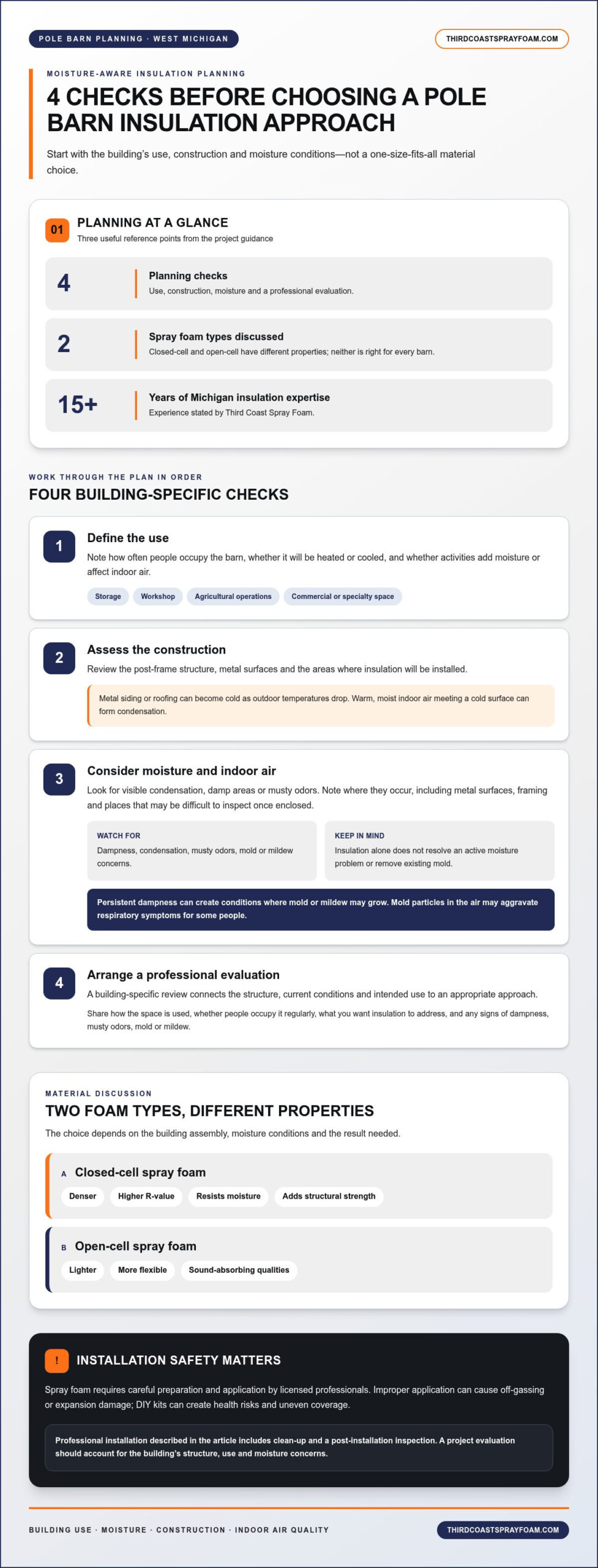
Work through the planning steps in order:
- Define the use. Note how often people occupy the barn, whether it will be heated or cooled, and whether activities add moisture or affect indoor air.
- Assess the construction. Review the post-frame structure, metal surfaces, and the areas where insulation will be installed.
- Consider moisture. Look for signs of dampness or condensation and include mold or mildew concerns in the plan.
- Arrange a professional evaluation. A building-specific review connects the structure, current conditions, and intended use to an appropriate approach.
What should be assessed before choosing an insulation approach?
Closed-cell spray foam is denser, has a higher R-value, resists moisture, and adds structural strength. Open-cell foam is lighter and more flexible, and its sound-absorbing qualities can be useful where reducing noise matters. These differences can help guide the discussion, but neither option is right for every barn. The choice depends on the building assembly, moisture conditions, and the result you need. Consider indoor air quality as part of the plan, particularly in regularly occupied spaces or where dampness raises concerns about mold and mildew.
Third Coast Spray Foam provides pole barn insulation and a free, no-obligation evaluation and quote to help shape a project-specific plan. Request a pole barn insulation evaluation. Exact project details depend on the building and are addressed through the free, no-obligation quote.
Get Professional Pole Barn Insulation in West Michigan
Spray foam installation requires careful preparation and application. Improper work can cause off-gassing or expansion damage, so spray foam should be installed by licensed professionals. DIY kits can create health risks and uneven coverage. Hiring professional installers helps avoid the application problems associated with DIY kits and allows the work to be planned for the pole barn’s surfaces and conditions.
For West Michigan buildings, an evaluation and installation should account for the structure, its use, and moisture concerns. Third Coast Spray Foam brings 15+ years of Michigan insulation expertise to pole barn projects. Professional installation includes clean-up and a post-installation inspection, with attention to the finished work as well as the application. These steps keep the project focused on building performance and indoor conditions, including air quality.
What to expect from a professional project evaluation
A pole barn evaluation starts with the building: its post-frame construction, metal surfaces, current condition, and areas where moisture or condensation may be a concern. Be ready to describe how you use the space, whether people occupy it regularly, and what you want the insulation to address. This context helps shape a plan around the actual building rather than a generic recommendation.
Share any visible dampness, musty odors, or signs of mold or mildew during the evaluation. These conditions matter to insulation planning and indoor air quality. Insulation alone should not be treated as a fix for an existing moisture problem. A project-specific review helps clarify the work involved, and the free, no-obligation quote provides exact project details.
For a closer look at the service, visit professional pole barn insulation from Third Coast Spray Foam. A careful evaluation is a practical first step toward a more comfortable, well-planned building.
Move Forward With a Pole Barn Plan That Fits
Before an evaluation, note how you use the barn, when you need it to be comfortable, and any areas where dampness, musty odors, or ventilation concerns affect the space. These details help focus the discussion on the building’s needs and the indoor conditions that matter to you. If you have noticed condensation, describe where and when it appears.
A thoughtful approach to pole barn insulation West Michigan can support a more usable space while keeping moisture management and indoor air quality in view. Third Coast Spray Foam serves West Michigan, including Grand Rapids, Lansing, Muskegon, Holland, Allegan, Kalamazoo, and Grand Haven. The team can help consider the building as a complete system, not just an insulation surface. Take the first step toward a plan shaped around your pole barn and its intended use: request a free, no-obligation pole barn insulation evaluation.
Frequently Asked Questions
What are the downsides of spray foam insulation?
The main concern is improper installation, which can cause off-gassing or expansion damage. That’s why licensed professional installation is required, with the approach matched to the building’s condition and intended use. This information is based on Third Coast Spray Foam’s own statements. Exact project details depend on the pole barn and are provided through a free, no-obligation quote.
Is DIY spray foam insulation recommended?
No. Third Coast Spray Foam advises against DIY spray foam kits because uneven application can leave inadequate seals, and the process can pose health risks. Spray foam work requires professional installation to reduce the risk of off-gassing or expansion damage. For a pole barn, a professional assessment can account for the building’s surfaces and conditions before an installation plan is set.
What is the difference between open-cell and closed-cell spray foam?
Closed-cell foam is denser, has a higher R-value, resists moisture, and adds structural strength. Open-cell foam is lighter and more flexible, making it suitable for some interior walls and soundproofing applications. These differences can influence comfort, moisture management, and noise control, but neither option is automatically right for every pole barn. The building and project requirements guide the choice.
Can spray foam be used on a roof in Michigan?
Third Coast Spray Foam states that spray foam roofing systems are suitable for Michigan homes and offer durability, leak resistance, and year-round insulation. That statement applies to roofing systems, not automatically to every pole barn roof assembly. The company serves West Michigan communities including Grand Rapids, Lansing, Muskegon, Holland, Allegan, Kalamazoo, and Grand Haven. A project-specific evaluation can clarify the approach for your structure.
Disclaimer
Information provided is for general educational purposes. Individual needs and circumstances vary. Speak to an experienced professional to get the correct information for your situation.