
Foundation protection starts with moisture management, not a promise that one solution fixes every crawl space. If damp soil, humid air, or seasonal changes are affecting the space beneath your Michigan home, crawl space encapsulation for protecting foundation health can help control moisture, limit conditions that encourage mold and mildew, and support the home’s structural condition.
It’s reasonable to wonder whether sealing a crawl space can also support indoor air quality, and what encapsulation can and can’t address. This guide explains how the service fits into moisture control, why dampness and musty odors matter for the indoor environment, and what to note before arranging an evaluation. Existing water issues and crawl space conditions shape the project, so an assessment is important. Third Coast Spray Foam offers a free, no-obligation evaluation and transparent quote. Exact project details require a free, no-obligation quote.
Key Takeaways
- Crawl space encapsulation for protecting foundation health focuses on moisture control, which can support the home’s structural condition and help limit conditions that encourage mold and mildew.
- Visible dampness, musty odors, mold, and indoor air quality concerns are useful details to note when considering whether encapsulation may suit your home.
- Encapsulation is a moisture-control service, not a promise to repair foundation damage or eliminate every source of water. Improper installation can cause off-gassing or expansion damage, so professional installation by licensed technicians is required.
- Third Coast Spray Foam serves West Michigan, including Grand Rapids, Lansing, Muskegon, Holland, Allegan, Kalamazoo, and Grand Haven, and has 15+ years of Michigan insulation expertise. This information is based on the company’s own statements; a free, no-obligation quote is required for exact project details.
How Crawl Space Encapsulation Can Help Protect a Foundation in West Michigan
In West Michigan, seasonal changes can bring snowmelt, damp ground, and humid air around a home. When excess moisture lingers below the floor, it can encourage mold and mildew and leave nearby wood framing exposed to prolonged dampness. Crawl space encapsulation for protecting foundation health is a moisture-control service intended to help manage those conditions and support the home’s structural integrity. It is not a substitute for repairing existing damage.
A crawl space is part of the home’s indoor environment, not an isolated pocket. The crawl space can influence conditions in the living areas above it, so musty odors or moisture concerns below may also be relevant to indoor air quality. Mold spores can irritate the respiratory system and may aggravate asthma. Reducing moisture does not guarantee that mold is eliminated or prevent every health concern, but managing dampness can help limit conditions that encourage mold and mildew.
What is the connection between crawl space moisture and foundation protection?
Crawl space encapsulation is a moisture-control service intended to help limit excess moisture in the space beneath a home. By managing damp conditions, encapsulation can help reduce the environment that encourages mold and mildew and support the durability of nearby structural materials. That is different from foundation repair: encapsulation does not promise to fix existing cracks, bowing, or other damage, and it may not resolve every source of water or humidity.
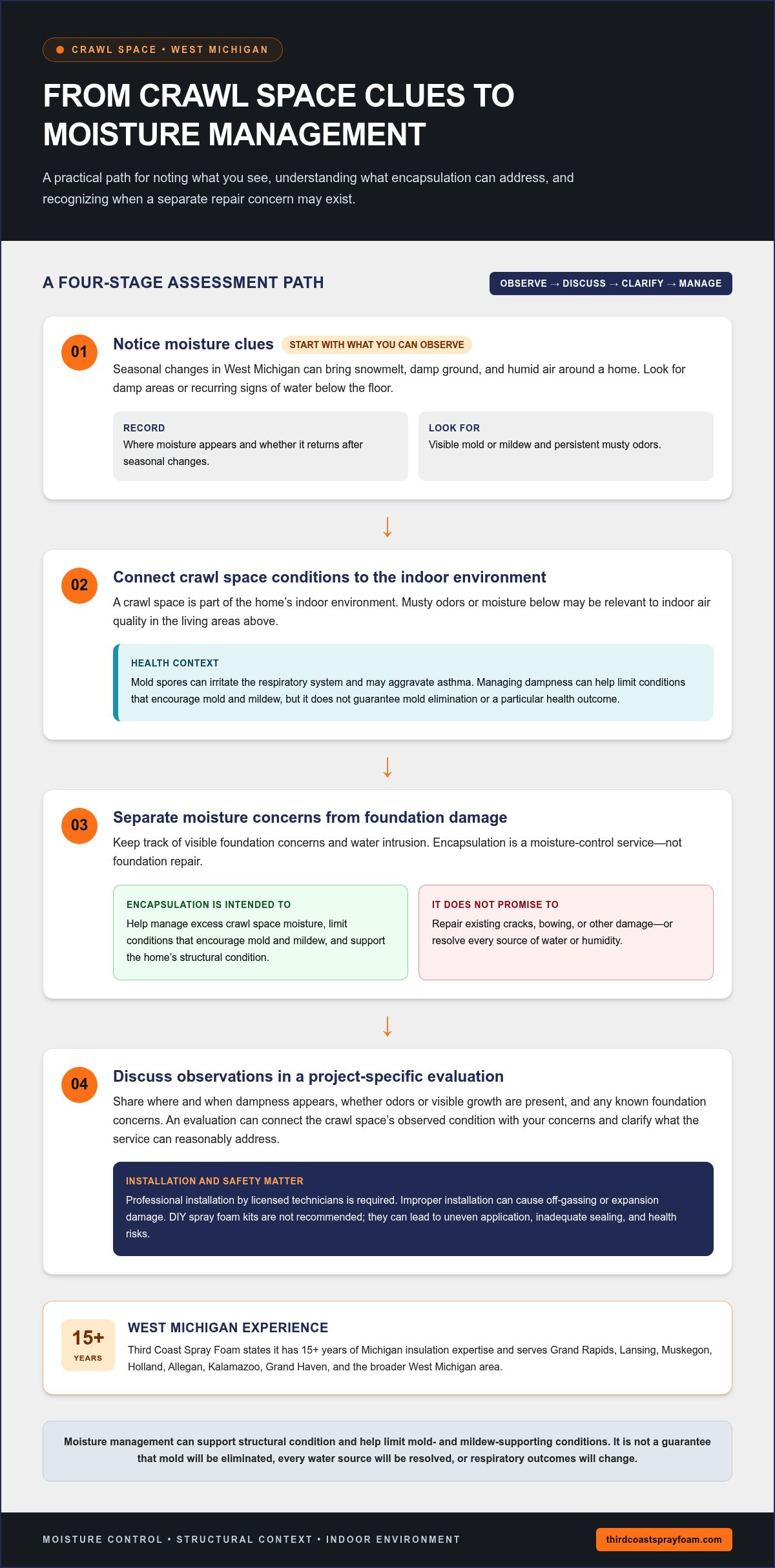
Think of moisture management as one part of caring for a home’s structural condition. Before an evaluation, note where water or dampness appears, whether the issue returns after seasonal changes, and whether there are visible foundation concerns. These observations can help clarify the project’s needs. Professional installation by licensed technicians is required. Improper installation can cause off-gassing or expansion damage, so this is not a project to approach as a DIY application.
What to Consider Before Choosing Crawl Space Encapsulation for Foundation Protection
Start with what you can observe. Note where moisture appears, whether mold or mildew is visible, whether the space has a persistent musty odor, and whether you have indoor air quality concerns. Record any known foundation issues, such as cracks or water intrusion, too. These details help distinguish a moisture-control need from a separate repair concern and make it easier to discuss the crawl space’s condition.
- Moisture: Look for damp areas or recurring signs of water, especially after seasonal changes. Note where and when they appear.
- Mold and mildew: Record visible growth or musty smells. Moisture management may help limit conditions that encourage them, but it is not a guarantee that existing mold will be eliminated.
- Indoor environment: Consider whether odors or air quality concerns seem connected to the crawl space. Managing moisture may support a healthier indoor environment, but it cannot guarantee respiratory outcomes.
- Foundation condition: Keep track of visible damage or water intrusion. Encapsulation is not foundation repair and does not promise to fix existing damage or address every moisture source.
How can homeowners weigh encapsulation’s benefits and limits?
Consider the whole picture rather than relying on one symptom. Crawl space encapsulation for protecting foundation health is intended to manage moisture, which may also help reduce conditions that support mold and mildew. A project-specific evaluation can connect the crawl space’s observed condition with your concerns and clarify what the service can reasonably address.
Professional installation matters for safety and performance. Improper application can cause off-gassing or expansion damage. DIY spray foam kits are not recommended because they can lead to uneven application, inadequate sealing, and health risks. Professional installation by licensed technicians is required.
Third Coast Spray Foam provides a free, no-obligation evaluation and a transparent quote. The information in this article is based on the company’s own statements, and a free, no-obligation quote is required for exact project details.
How Third Coast Spray Foam Supports Crawl Space Encapsulation in West Michigan
Third Coast Spray Foam provides crawl space encapsulation as a moisture-control service intended to help prevent mold and improve indoor air quality. In a home with dampness or recurring musty odors below the living space, managing moisture can be a practical part of supporting a healthier indoor environment and the home’s structural condition. Encapsulation is not a guarantee that mold will be eliminated or that every source of moisture will be resolved.
Michigan experience matters in a region shaped by seasonal changes. Third Coast Spray Foam brings 15+ years of Michigan insulation expertise to crawl space projects across West Michigan. The company serves communities including Grand Rapids, Lansing, Muskegon, Holland, Allegan, Kalamazoo, and Grand Haven, as well as locations across the broader West Michigan area. Project details depend on the home’s conditions, so a general description cannot determine the right scope or outcome for a particular crawl space.
What happens when you request a project-specific evaluation?
A free, no-obligation evaluation gives you an opportunity to discuss the conditions that led you to consider encapsulation, such as visible moisture, mold or mildew, indoor air quality concerns, or questions about the foundation. Third Coast Spray Foam provides a transparent quote based on the project. Exact details require a free, no-obligation quote. This article reflects the company’s own statements and does not promise a particular result.
If you’re considering crawl space encapsulation for protecting foundation health, a project-specific discussion can help clarify how moisture control relates to your home’s needs. The company’s crawl space service information explains how to take the next step.
Take the Next Step Toward a Drier, Healthier Home
Keep a brief record of what you notice below and above the floor. Note when dampness or musty odors appear, where they occur, and whether indoor air concerns change at the same time. Include any visible mold, signs of water intrusion, or foundation concerns. This information can make a project discussion more specific, especially when you’re weighing crawl space encapsulation for protecting foundation health against other issues in the home.
Moisture control can be part of caring for your home’s structure and indoor environment, but the right approach depends on the conditions present. A clear understanding of those conditions helps set realistic expectations about mold and mildew, air quality, and what encapsulation can address.
For homeowners in Grand Rapids, Lansing, Muskegon, Holland, Allegan, Kalamazoo, Grand Haven, and the surrounding West Michigan area, request a free, no-obligation crawl space evaluation from Third Coast Spray Foam. You’ll receive a transparent quote tailored to the project. This information is based on the company’s own statements, and a free, no-obligation quote is required for exact project details.
Frequently Asked Questions
What are the downsides of spray foam?
Improper installation can cause off-gassing or expansion damage. These are risks of poor application, not inevitable effects of spray foam. For crawl space encapsulation for protecting foundation health, keep the service’s moisture-control purpose separate from installation risks.
Are DIY spray foam kits recommended?
No. Third Coast Spray Foam advises against DIY spray foam kits because they can result in uneven application, inadequate sealing, and health risks. In a crawl space, inconsistent application may interfere with the intended moisture-control work. Professional installation by licensed technicians is the appropriate approach, rather than attempting to apply a kit yourself.
What is the difference between closed-cell and open-cell spray foam?
Closed-cell foam is denser, has a higher R-value, resists moisture, and is structural. Open-cell foam is lighter and more flexible, making it better suited to interior walls and soundproofing. These are general differences between the two types. The comparison alone does not determine which option suits a particular project or mean either type is used in every crawl space.
Can fiberglass and cellulose insulation be used in different situations?
Yes. Fiberglass is described as a cost-effective option for attics and wall cavities, while blown-in cellulose can be useful for retrofit projects or topping up existing insulation. These uses refer to insulation in those areas, not to crawl space encapsulation components. The materials have different applications, so the location and purpose of the insulation matter when considering them.
Disclaimer
Information provided is for general educational purposes. Individual needs and circumstances vary. Speak to an experienced professional to get the correct information for your situation.