
What if the musty smell drifting into your living space is coming from below your floors? Crawl space encapsulation for healthier air quality can help manage moisture where it starts, rather than simply masking an odor. Air can move between a crawl space and the rooms above through gaps around plumbing, wiring, and floor openings, carrying odors with it. Persistent moisture can also support mold and mildew growth, which may aggravate respiratory irritation for some people.
Encapsulation can help address a source of moisture, but it is not a medical treatment or a guarantee of healthier air. The useful first step is to identify what you have noticed and consider what may be causing it. This guide explains how crawl space conditions can affect indoor air, what to look for, and how to decide whether professional encapsulation may suit your home.
Key Takeaways
- Crawl space encapsulation for healthier air quality focuses on moisture management. It may support indoor-air goals, but it cannot guarantee a health outcome.
- Encapsulation and insulation serve different purposes: encapsulation manages moisture, while insulation helps control heat flow.
- Recurring odors or visible dampness are reasons to look for a moisture source before choosing a solution.
- West Michigan homeowners can use observations about their crawl space to guide decisions about moisture control.
How crawl space moisture can affect indoor air quality
A musty odor near the floor or a persistent damp feeling can be a reason to investigate the crawl space. These signs do not prove that moisture below the home is affecting indoor air, but they can point to conditions worth examining. Crawl space encapsulation helps separate the space from ground moisture and outside air. It can support indoor-air goals, but it cannot guarantee a particular air-quality result.
What is the connection between a crawl space and the air indoors?
A home’s spaces are connected through gaps around plumbing, wiring, floor openings, and other building joints. Depending on the home’s layout and air movement, odors and air from a crawl space may travel into rooms above. A general overview of crawl space encapsulation describes it as one approach used to address crawl space conditions.
Moisture matters because persistently damp materials can support mold or mildew growth. The EPA identifies moisture control as central to mold control. Mold in a home may be a concern for indoor air and respiratory comfort, particularly for people with asthma or sensitivities. However, an odor or symptom alone cannot establish the source. Indoor air can also be affected by activities and materials elsewhere in the home, so consider the broader environment rather than assuming one cause.
A possible connection between crawl space air and indoor air is not proof that the crawl space is causing anyone’s symptoms.
If you are considering crawl space encapsulation for healthier air quality, start by noting recurring musty odors, visible dampness, or moisture on crawl space surfaces. These observations can help clarify whether moisture may be entering the space and whether encapsulation could address the condition. If you cannot view the crawl space safely, do not enter it just to investigate.
What crawl space encapsulation can address, and what it cannot
Encapsulation and insulation solve different problems. Encapsulation is designed to manage moisture in the crawl space, helping limit conditions that can contribute to mold or mildew. Insulation slows heat transfer and helps control indoor temperatures. One does not automatically replace the other.
Is encapsulation the same as crawl space insulation?
No. Think of the crawl space as part of the home’s building envelope, where moisture control and thermal performance work together but have distinct roles. Dampness may need attention even if the home feels comfortable, while insulation alone does not resolve a moisture source. Understanding crawl space insulation as part of the broader system can help clarify which concern needs attention first.
For homeowners considering crawl space encapsulation for healthier air quality, the practical goal is to address moisture conditions that may affect the home environment. Encapsulation can support indoor-air goals, but it cannot identify the cause of respiratory symptoms, diagnose a health condition, or treat one. If occupants have ongoing respiratory concerns, discuss them with a qualified health professional rather than assuming the crawl space is responsible.
Recurring dampness or odors call for looking beyond the smell itself. Consider where moisture may be entering, whether surfaces show signs of dampness or mold, and whether other parts of the home could contribute to indoor-air concerns. Addressing the source is more useful than masking an odor, and the right approach depends on the conditions in the space.
Third Coast Spray Foam provides crawl space encapsulation as a moisture-management service. Homeowners can learn about crawl space encapsulation and how it may fit into the home’s overall building-envelope needs.
Planning crawl space encapsulation for a West Michigan home
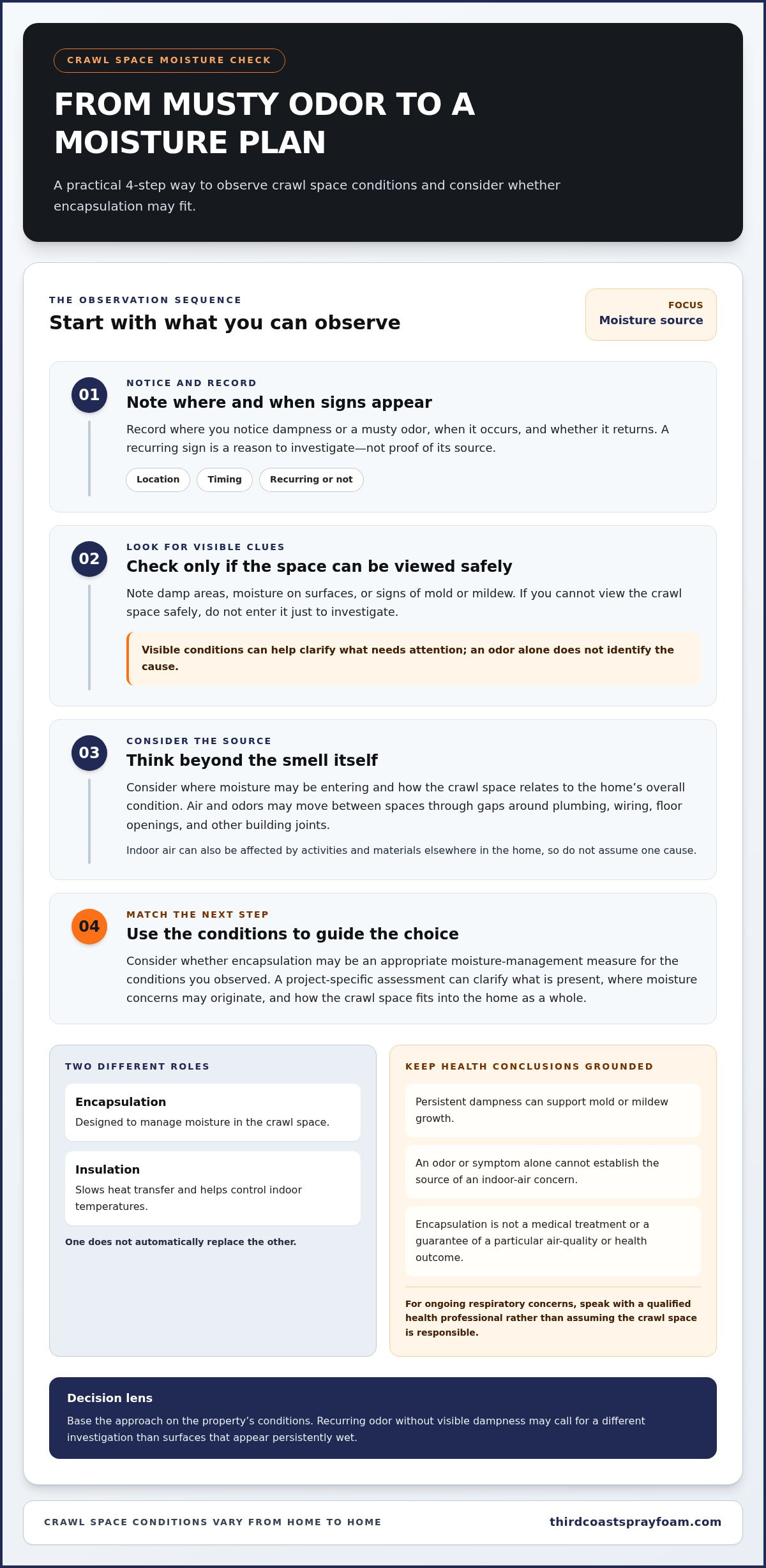
A practical plan starts with what you can observe, then focuses on the possible source rather than treating every musty odor the same way. Crawl spaces and moisture conditions vary from home to home, so base the decision on the property’s conditions instead of assuming one approach fits every house.
- Note the signs. Record where and when you notice dampness or musty odors, and whether they return.
- Look for visible clues. If the crawl space can be viewed safely, note damp areas, moisture on surfaces, or signs of mold or mildew.
- Consider the source. Think about where moisture may be entering and how the crawl space relates to the home’s overall condition.
- Choose a fitting next step. Use what you have observed to decide whether encapsulation is an appropriate moisture-management measure.
What should homeowners expect from a project-specific assessment?
A useful assessment clarifies what conditions are present, where moisture concerns may originate, and how the crawl space fits into the home as a whole. That context matters: a recurring odor without visible dampness may call for a different investigation than surfaces that appear persistently wet. The aim is to match the approach to the property, not assume a universal solution or promise a particular health outcome.
Third Coast Spray Foam is based in Fruitport and serves communities including Grand Rapids, Lansing, Muskegon, Holland, Allegan, Kalamazoo, and Grand Haven. Conditions can differ between homes, so observations from one property do not establish what another needs. For homeowners weighing crawl space encapsulation for healthier air quality, focusing on the moisture conditions in your home can help turn concern into a practical next step.
Explore Third Coast Spray Foam’s crawl space encapsulation service for professional moisture management tailored to your home.
Make a practical next move for your home
Start with what you have observed and keep track of where dampness or odors appear. A simple record can help focus decisions on the conditions that matter instead of jumping to conclusions about indoor air or health. Treat crawl space encapsulation for healthier air quality as one part of a considered home-maintenance plan, not a promise of medical results.
Third Coast Spray Foam provides crawl space encapsulation as a moisture-control service for homeowners across West Michigan. Explore whether this approach fits your home and its needs. Learn about crawl space encapsulation for your West Michigan home and take a clear next step toward addressing crawl space moisture.
Frequently Asked Questions
Can crawl space encapsulation improve indoor air quality?
It may support indoor air quality by reducing a crawl space moisture source, but the effect depends on the home’s conditions and other indoor-air sources. Crawl space encapsulation for healthier air quality is best considered alongside other possible concerns, such as a plumbing leak, damp stored items, or inadequate ventilation elsewhere. If odors continue after moisture concerns are addressed, look for other sources rather than assuming encapsulation has failed.
Does crawl space encapsulation prevent mold and mildew?
Encapsulation can help limit moisture conditions that encourage mold and mildew, but it cannot promise they will never develop. Existing growth and the moisture that supports it need appropriate attention. Covering a damp surface without addressing the source can leave the problem unresolved. If you notice visible growth or a recurring musty smell, note where it appears and include that information when considering crawl space moisture management.
Is crawl space encapsulation the same as insulation?
No. Encapsulation manages moisture, while insulation reduces heat transfer. For example, a homeowner might be concerned about dampness and musty odors even if rooms feel warm enough, or notice cold floors without visible moisture. Those are different clues and may call for different building-envelope measures. Consider which conditions are present to determine whether moisture control, insulation, or both fit the property.
Can crawl space mold cause respiratory problems?
Mold exposure can cause or worsen respiratory symptoms in some people, including those with allergies or asthma, according to the CDC. Possible symptoms do not prove that mold is present or that a crawl space is the source; other indoor or outdoor factors may be involved. If breathing symptoms persist or worsen, speak with a healthcare professional. Address suspected dampness as a home-maintenance concern separately.
Disclaimer
Information provided is for general educational purposes. Individual needs and circumstances vary. Speak to an experienced professional to get the correct information for your situation.