
Could controlling moisture help with uneven floors, even if it can’t level them? Crawl space encapsulation for uneven floors can help manage conditions beneath your home, but it won’t repair sagging joists, shifting supports, or foundation movement. The first step is to understand what may be causing the dampness and what may be causing the floor slope. Those concerns can overlap, but they don’t always have the same solution.
This guide explains what encapsulation can do, what it can’t fix, and which signs may call for a closer look at floor framing or foundation conditions. It also covers why crawl space moisture matters for indoor air quality: dampness can support mold and mildew, and mold exposure may aggravate respiratory symptoms, including asthma. For homeowners in Grand Rapids, Lansing, Muskegon, Holland, Allegan, Kalamazoo, and Grand Haven, separating moisture control from structural repair is a practical first step toward protecting the home and the air inside it.
Key Takeaways
- Crawl space encapsulation for uneven floors manages moisture, not floor level. Identifying the cause of the slope helps determine the next step.
- Visible water, damp materials, musty odors, and mold or mildew are reasons to investigate, but none identifies the moisture source on its own.
- Note where floors feel uneven, whether they bounce or feel soft, and whether the symptoms are changing. Compare those observations with crawl space conditions.
- A tailored plan can address moisture concerns while recognizing when floor framing or foundation conditions need separate evaluation.
Can Crawl Space Encapsulation Fix Uneven Floors? Start With the Cause
A sloping or soft floor can make a home feel less stable, but the surface alone can’t reveal why it’s uneven. Crawl space encapsulation for uneven floors is moisture management, not floor leveling. Encapsulation is intended to limit moisture in the space below the home. Managing damp conditions may help address an environment that can contribute to wood deterioration over time, but encapsulation won’t correct settled supports, damaged floor framing, or other structural movement.
A crawl space is the low area beneath a home that provides access to plumbing, wiring, and other parts of the building. Its condition is one part of the picture, not a diagnosis. A floor symptom alone can’t confirm whether moisture, framing, settlement, or another issue is responsible. Look at the floor and the crawl space conditions together before deciding which solution fits.
Which crawl space and floor symptoms deserve attention?
Musty odors, visible dampness, wet materials, and mold or mildew are reasons to investigate moisture. They don’t identify its source on their own. Persistent dampness can also affect indoor air quality. Air and particles from below may move into living areas, and mold exposure may aggravate respiratory symptoms, particularly for people with asthma or sensitivities. Controlling moisture can help address conditions that support mold growth, but it can’t guarantee a particular health outcome.
Pay attention to where the floor feels uneven and how it behaves underfoot. A slope across a room, a floor that bounces, or a soft spot may warrant a closer look at framing and support. Uneven flooring material can also create surface irregularities, so the feel of the floor alone doesn’t establish the cause. Note which rooms and areas are affected, whether symptoms are changing, and whether you’ve also noticed dampness or musty odors below. This context helps guide a more useful assessment.
How to Assess Crawl Space Moisture Before Choosing Encapsulation
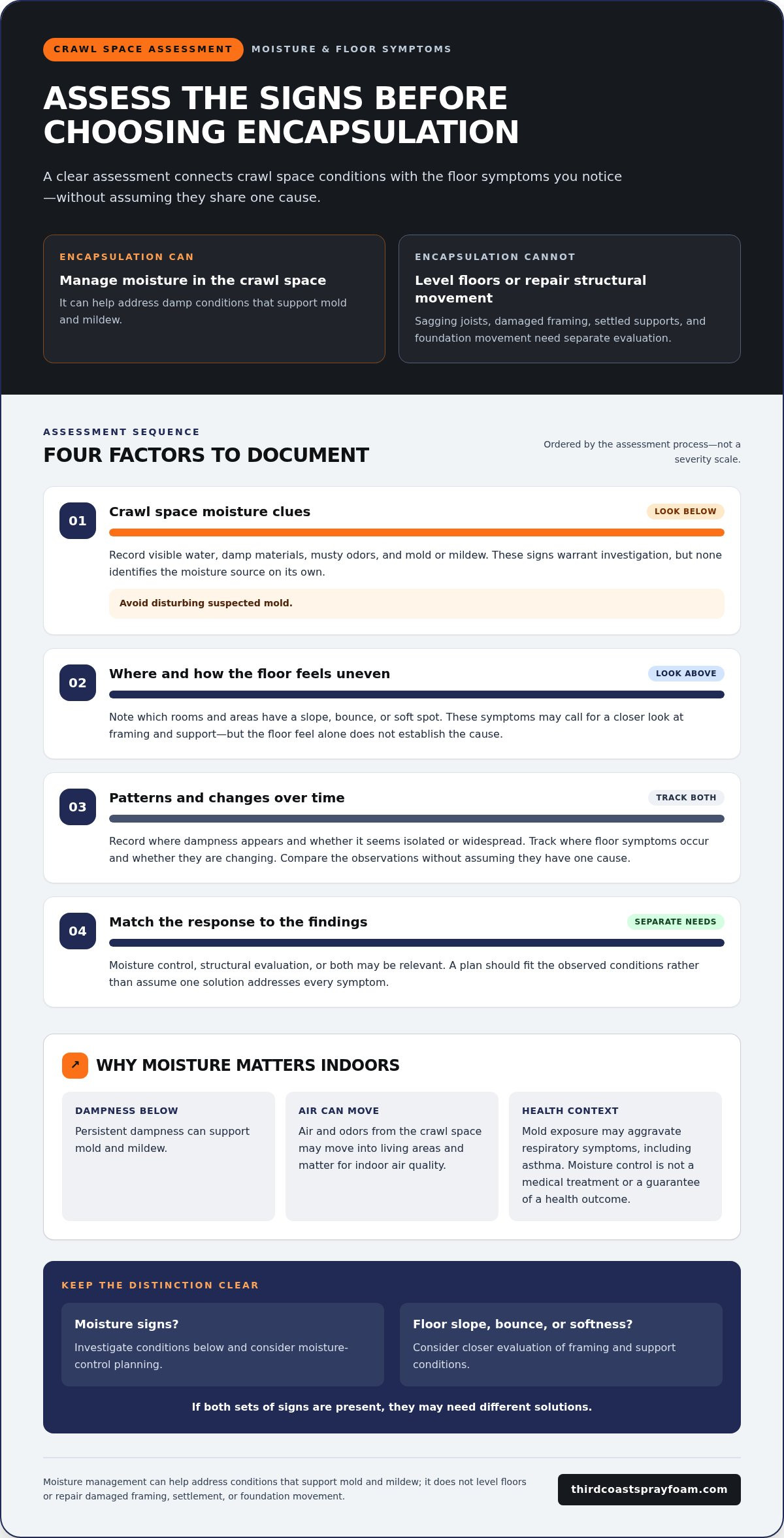
A useful assessment connects what you observe below the home with what you notice on the floor. No single clue tells the whole story. Record the signs and patterns first, then consider whether crawl space encapsulation for uneven floors belongs in the plan.
- Record what you observe: Note visible water, damp materials, musty odors, or mold and mildew. These are reasons to investigate, not proof of a particular leak or moisture source. Avoid disturbing suspected mold.
- Look for moisture patterns: Note where dampness appears and whether it seems isolated or widespread. The goal is to understand the conditions, not just cover visible signs. Encapsulation can help manage crawl space moisture, and the approach should reflect the conditions found.
- Track floor symptoms: Record where the floor slopes, bounces, or feels soft, and whether the issue is changing. Compare those areas with your crawl space observations, but don’t assume they share one cause. Moisture management can’t replace repairs for damaged framing or settlement.
- Match the next steps to the findings: Consider whether moisture control, structural evaluation, or both are relevant. The plan should fit the home’s observed conditions rather than assume one solution addresses every symptom.
How moisture, indoor air, and respiratory concerns fit together
Air and odors can move between a crawl space and the rooms above, so dampness and mold below may be relevant to indoor air quality. Managing moisture can reduce conditions that support mold and mildew, but it isn’t a medical treatment or a guarantee against respiratory symptoms. Persistent dampness or indoor air concerns deserve attention. For homeowners in Grand Rapids, Lansing, Muskegon, Holland, Allegan, Kalamazoo, and Grand Haven, crawl space encapsulation can be part of a moisture-control plan tailored to the conditions observed.
Choosing Next Steps for Uneven Floors and Crawl Space Encapsulation
Let the evidence guide the next step. Musty odors, damp materials, or visible moisture can make moisture-control planning relevant. A floor that slopes, feels soft, bounces, or is changing over time calls for closer evaluation of framing and support conditions. If both sets of signs are present, treat them as related concerns that may still need different solutions.
What a homeowner can expect from a tailored moisture-control plan
A professional assessment connects your concerns with the crawl space conditions observed, rather than assuming one symptom explains everything. The recommended steps are tailored to those conditions. Encapsulation can help manage moisture, but it doesn’t level floors or repair structural damage. In cases where settlement or foundation movement has occurred, foundation repair companies such as Crown Leveling Inc. focus specifically on house leveling to restore structural stability. If moisture and a framing or settlement issue are both present, each needs attention suited to the problem.
This distinction matters for indoor comfort, too. Addressing persistent dampness can help manage conditions that support mold and mildew, which may affect indoor air quality. For properties dealing with standing water or severe moisture damage, restoration specialists like Triangle Legacy Flood Restoration & Carpet Cleaning provide cleanup and remediation to restore affected areas. Moisture control isn’t a medical treatment and can’t promise a particular respiratory outcome. Ongoing dampness or persistent air-quality concerns deserve attention.
Third Coast Spray Foam provides crawl space encapsulation as a moisture-control service for homes in Grand Rapids, Lansing, Muskegon, Holland, Allegan, Kalamazoo, and Grand Haven. The service is tailored to observed crawl space conditions. If you’re weighing encapsulation alongside uneven floors, consider moisture management and any needed structural evaluation as separate parts of the plan.
Choose the Next Step That Protects Your Home
The right solution starts with the cause. Crawl space encapsulation manages moisture and can help address conditions that support mold and mildew, but it doesn’t level floors or repair damaged framing, settled supports, or foundation movement. Sloping, soft, or bouncing floors deserve closer structural evaluation, whether or not dampness is also present.
That distinction helps you plan with confidence. A tailored assessment can connect crawl space conditions with the concerns you’ve noticed, so moisture management and any needed floor repairs are treated as separate parts of the plan. Managing persistent dampness can also support healthier indoor air, though it can’t guarantee a particular respiratory outcome.
Third Coast Spray Foam provides crawl space encapsulation as a moisture-control service for homeowners across West Michigan, including Grand Rapids, Lansing, Muskegon, Holland, Allegan, Kalamazoo, and Grand Haven. Explore crawl space encapsulation with Third Coast Spray Foam and take a practical next step toward managing moisture in your crawl space.
Frequently Asked Questions
Can crawl space encapsulation fix uneven floors?
No. Crawl space encapsulation for uneven floors is moisture control, not floor leveling. If dampness has contributed to wood deterioration, controlling moisture may help protect the crawl space, but it won’t restore damaged joists or correct settlement. First identify why the floor is uneven. The appropriate plan may involve moisture management, structural repairs, or both.
What causes uneven floors above a crawl space?
Uneven floors can result from changes in floor framing, moisture-related wood deterioration, or movement in the structure. The same visible slope can have different causes, so appearance alone isn’t enough to diagnose it. Note whether floors slope, bounce, or feel soft, and look for dampness, musty odors, or visible mold below. These observations can guide an assessment, but they don’t prove a cause.
Can crawl space moisture affect indoor air quality?
Yes. Dampness and mold or mildew in a crawl space can be relevant to indoor air quality because conditions below the home may affect the air in living areas. Moisture management can help address the environment that supports mold growth, but encapsulation isn’t a medical treatment and can’t guarantee relief from coughing, asthma, or other respiratory symptoms. Persistent indoor air concerns deserve attention.
Should I encapsulate a crawl space before repairing uneven floors?
The right order depends on the cause of the floor issue and the moisture conditions below the home. Moisture control and structural repairs address different problems, so one shouldn’t be assumed to replace the other. An assessment can help shape a tailored plan. Third Coast Spray Foam provides crawl space encapsulation across Grand Rapids, Lansing, Muskegon, Holland, Allegan, Kalamazoo, and Grand Haven.
Disclaimer
Information provided is for general educational purposes. Individual needs and circumstances vary. Speak to an experienced professional to get the correct information for your situation.