
Could the insulation meant to protect your home be contributing to dust, musty odors, or irritated breathing? For Grand Rapids homeowners, it can be hard to tell whether insulation is damaged or contaminated, and whether removal is the right next step. This guide to attic insulation removal Grand Rapids homeowners can use explains why both the material and the cause of the problem matter. Removing damp insulation alone won’t address the moisture source or prevent mold from returning.
You’ll learn what to look for, what careful removal and cleanup involve, and how to plan for replacement insulation. We’ll also cover why checking for moisture and air leaks matters when protecting indoor air quality and respiratory comfort. These steps can help you make a practical plan for your attic, whether your home is in Grand Rapids, Lansing, Muskegon, Holland, Allegan, Kalamazoo, or Grand Haven.
Key Takeaways
- Visible damage, contamination, persistent odors, or uneven coverage can signal that attic insulation needs an assessment.
- Careful removal includes evaluating attic conditions, defining the scope, removing old material, and cleaning the work area with indoor air quality in mind.
- For attic insulation removal Grand Rapids homeowners are considering, identifying moisture concerns is an important step before planning replacement.
- Use the attic’s condition to guide what comes next, including whether blown insulation may help restore thermal performance.
When Does Attic Insulation Removal Make Sense in Grand Rapids?
Not every older attic needs insulation removed. In Grand Rapids, visible damage, patchy coverage, persistent musty odors, or signs of contamination are reasons to assess the material and the conditions around it. These clues don’t confirm the cause, but they can help determine whether the insulation is still in usable condition or whether damage, debris, or moisture has changed the situation.
Insulation slows heat transfer through a home’s building envelope, as explained in this Building insulation overview. Dusty or contaminated material can release particles when disturbed, affecting indoor air quality in the work area and potentially irritating the nose, throat, or airways. Damp insulation also raises concerns about mold or mildew. Look at the material alongside possible moisture sources, such as signs of leaks or condensation, rather than treating the insulation as the only issue.
This video shows an insulation removal project. Use it as a visual overview, not a substitute for assessing attic conditions and material safety.
Could old or contaminated insulation affect indoor air quality?
It can. Disturbing dusty or contaminated insulation may release particles into the work area, where they can affect indoor air quality and cause respiratory irritation. Careful removal and cleanup help limit the spread of loose material into living spaces, but can’t guarantee a particular health outcome. Odors and visible residue are useful clues for an assessment, but don’t identify the cause on their own.
If you suspect mold or mildew, pay attention to moisture, including possible leaks or condensation. Removing insulation does not correct the moisture source or prevent the problem from recurring. For homeowners considering attic insulation removal Grand Rapids, assessing both the material’s condition and what may have caused it to change is a sensible first step.
What Happens During Professional Attic Insulation Removal?
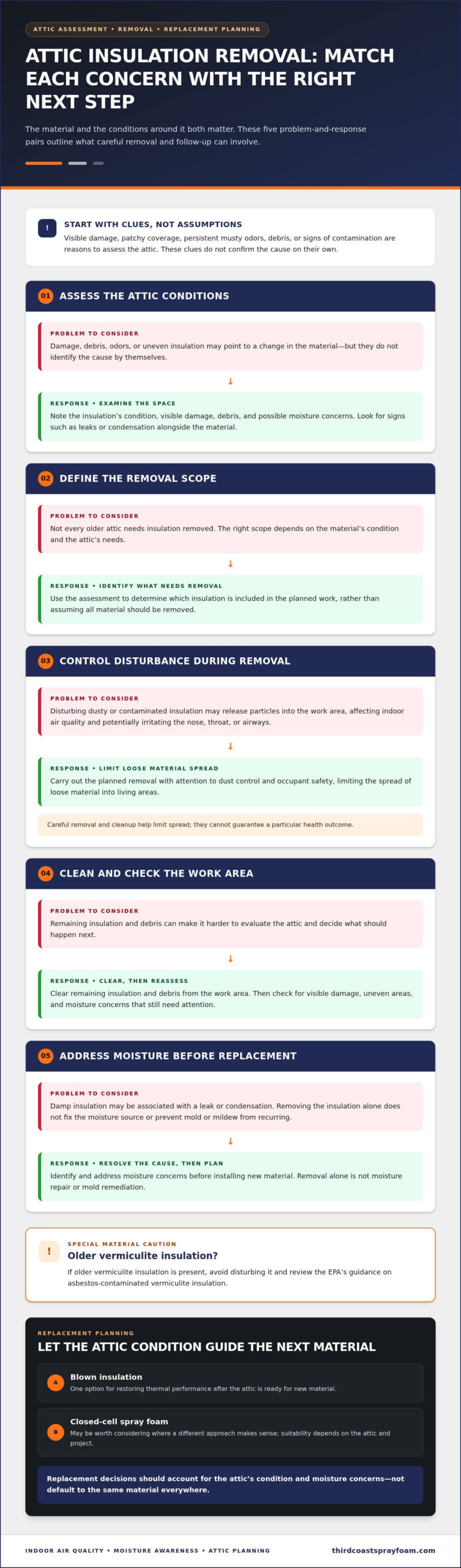
Professional attic insulation removal in Grand Rapids starts with understanding the space, not immediately pulling material out. The condition of the insulation, signs of moisture or contamination, and the attic’s layout help determine the work area and removal scope. If older vermiculite insulation is present, avoid disturbing it and review the EPA’s guidance on asbestos-contaminated vermiculite insulation.
A careful project generally follows these steps:
- Assess: Examine attic conditions and note visible damage, debris, or moisture concerns.
- Define the scope: Identify which insulation needs removal based on its condition and the attic’s needs.
- Remove: Carry out the planned work with attention to dust control and occupant safety, limiting the spread of loose material into living areas.
- Clean: Clear remaining insulation and debris from the work area so the attic can be evaluated for the next step.
- Plan replacement: Consider suitable insulation after the attic’s condition and any moisture or contamination concerns have been addressed.
How should removal and replacement be planned together?
Removal and replacement are connected, but the right scope depends on what the attic reveals. If a leak or condensation has dampened insulation, identify and address the moisture source before installing new material. Otherwise, dampness may recur and create conditions that support mold or mildew. Insulation removal alone doesn’t fix the moisture source or provide mold remediation.
After moisture concerns have been addressed and the attic is ready for new material, blown-in insulation in Grand Rapids is one option for restoring thermal performance. Third Coast Spray Foam provides professional insulation removal and blown insulation for homes in the Grand Rapids area.
Plan Your Grand Rapids Attic’s Next Step After Insulation Removal
Once old insulation is removed, use the attic’s condition to guide what happens next. Check for remaining debris, visible damage, uneven areas, and signs of moisture that still need attention. Addressing the cause of dampness before installing new insulation helps avoid covering up a problem that could affect the material and indoor air quality again.
Choose replacement only after considering the attic’s condition and moisture concerns. The right plan should support thermal performance while accounting for the space’s needs, rather than defaulting to the same material everywhere. ENERGY STAR’s Sealing and Insulating with ENERGY STAR guide explains how air sealing fits into insulation planning.
What replacement options can follow attic insulation removal?
Blown insulation is one option for restoring coverage, with suitability depending on the attic and project. For areas where a different approach makes sense, closed-cell spray foam may be worth considering. Learn more in this closed-cell spray foam guide for Grand Rapids.
For homeowners planning attic insulation removal Grand Rapids, removal and replacement work best as connected decisions. A clear understanding of the attic’s condition helps shape the next step and supports a more complete plan for comfort and energy performance. Third Coast Spray Foam serves homeowners in Grand Rapids, Lansing, Muskegon, Holland, Allegan, Kalamazoo, and Grand Haven with professional insulation removal and blown insulation.
Give Your Grand Rapids Attic a Sound Next Step
Signs of damage, contamination, or uneven coverage can make insulation removal worth assessing. A careful plan considers the attic’s condition and any moisture concerns before replacement, helping protect indoor air quality and support thermal performance. Removing insulation alone won’t fix a leak or other moisture source.
Third Coast Spray Foam provides professional insulation removal for homeowners in Grand Rapids and across West Michigan. Once the attic is ready, blown insulation may be a suitable replacement option, depending on the project. Planning the steps in order helps you move from uncertainty to a more practical plan for your home.
Frequently Asked Questions
When should attic insulation be removed instead of covered?
Removal may make sense when insulation is visibly damaged, damp, contaminated, uneven, or associated with a persistent odor. These signs call for an assessment rather than proving that all the material must come out. An inspection can help determine whether affected areas need removal or whether another solution is appropriate. Covering material before understanding its condition can leave moisture or contamination concerns hidden.
Can attic insulation removal improve indoor air quality?
It may help address a source of particles that can affect indoor air quality, but removal can’t guarantee healthier air or specific respiratory outcomes. Disturbing old or contaminated material can temporarily release dust and debris into the work area, so careful removal and cleanup matter. The insulation’s condition and possible paths for particles into living spaces should inform the plan.
Does insulation removal get rid of mold in an attic?
No. Removing insulation that appears moldy may remove some affected material, but the work alone doesn’t correct the moisture source that allowed mold or mildew to develop. Leaks, condensation, or other dampness concerns need attention before replacement is planned. Insulation removal isn’t mold remediation, and visible growth should be considered as part of a broader moisture investigation.
What happens after attic insulation is removed?
After removal, the attic should be inspected for remaining debris, damage, and signs of moisture or contamination. Cleanup prepares the area for the next decision, but new insulation should wait until moisture concerns are understood and addressed. Depending on attic conditions, blown insulation may be an option to restore thermal performance. Third Coast Spray Foam serves Grand Rapids, Lansing, Muskegon, Holland, Allegan, Kalamazoo, and Grand Haven.
Talk with Third Coast Spray Foam about attic insulation removal and plan a practical next step for your home.
Disclaimer
Information provided is for general educational purposes. Individual needs and circumstances vary. Speak to an experienced professional to get the correct information for your situation.