
What if the very insulation meant to keep your West Michigan home warm is actually the hidden source of that persistent musty smell in your hallway? You’ve likely noticed your upstairs rooms are stifling in July or seen those dangerous ice dams forming along your gutters every January. It’s frustrating to feel like your house is fighting against you, especially when you’re just trying to keep your family comfortable and your energy bills under control.
This guide will show you the most effective strategies for attic insulation for low-slope roofs that go beyond simple temperature control to safeguard your home’s structural integrity and your family’s respiratory health. We’ll compare high-performance spray foam against traditional blown-in options, focusing on how the right choice prevents mold growth and creates a permanent, airtight seal in even the tightest attic spaces.
Key Takeaways
- Learn why traditional ventilation often fails in shallow attic spaces and how trapped moisture leads to hidden structural rot.
- Discover how closed cell spray foam provides superior attic insulation for low-slope roofs by creating a high-performance, unvented “hot roof” system.
- Understand the critical health benefits of professional insulation removal to eliminate allergens, rodent waste, and mold from your living environment.
- Identify why professional installation is necessary to reach narrow eaves and ensure your home’s thermal envelope is truly airtight.
The Unique Challenges of Attic Insulation for Low-Slope Roofs
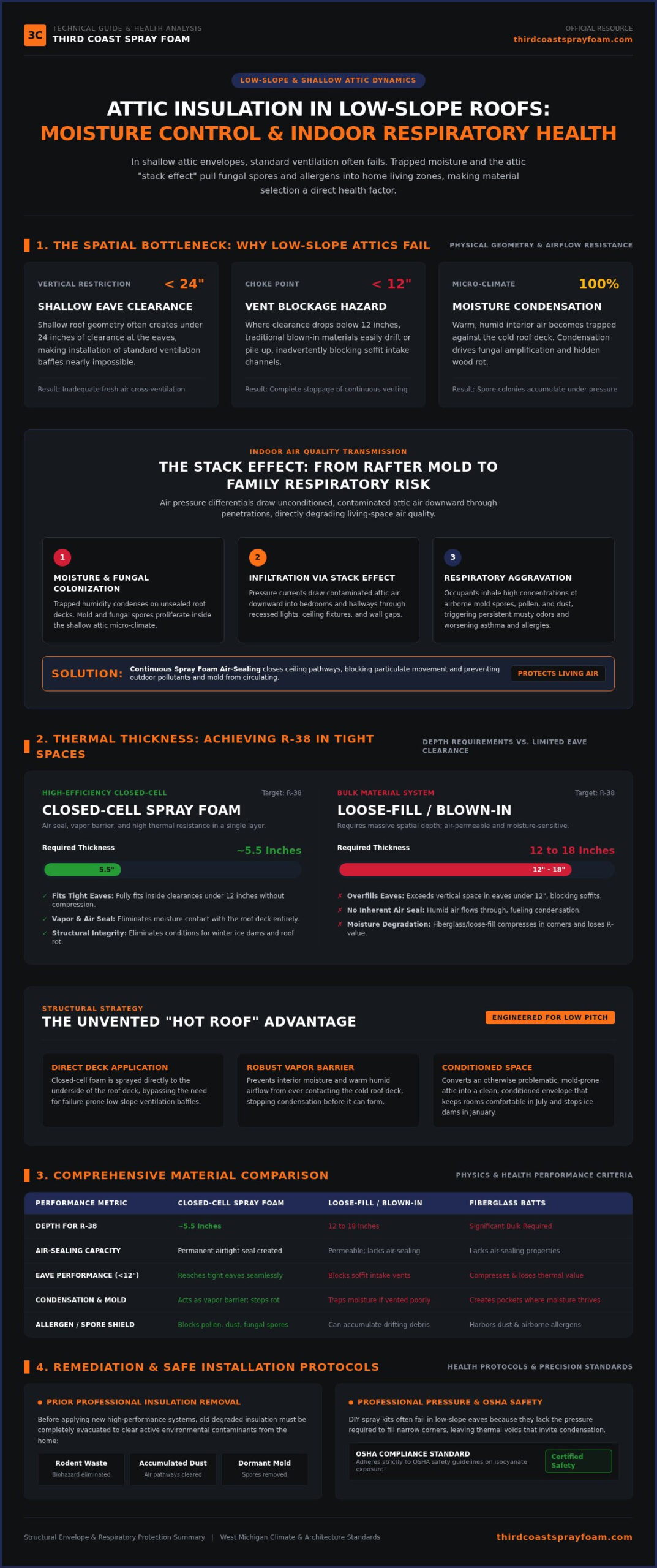
Low-slope roofs, found on many mid-century and modern homes across West Michigan, present a structural hurdle that standard pitched attics simply don’t face. Because these roofs have a shallow pitch, there’s often less than 24 inches of vertical clearance at the eaves. This tight space makes it nearly impossible to install traditional baffles, which complicates the process of choosing the right attic insulation for low-slope roofs. Without proper airflow, warm, humid air from your home gets trapped against the underside of the roof deck. This leads to persistent condensation, which is the primary catalyst for mold growth and structural wood rot. The unique geometry of these shallow spaces creates a pressurized micro-climate where allergens and fungal spores accumulate in high concentrations.
To better understand how these structural designs impact your home’s performance, watch this helpful video:
How Poor Insulation Impacts Your Respiratory Health
Mold spores don’t stay hidden in the rafters. Through a process called the stack effect, air naturally moves from the lower levels of your house toward the roof, often pulling contaminated attic air into your living spaces through light fixtures and wall gaps. If your attic insulation for low-slope roofs isn’t managing moisture correctly, you’re likely breathing in triggers that worsen asthma and seasonal allergies. High-quality spray foam insulation solves this by creating a permanent air seal. This barrier doesn’t just stop moisture; it prevents outdoor pollutants like pollen and dust from circulating through your home. By sealing these pathways, we help ensure your indoor air stays clean and safe for your family, providing a level of security that traditional materials can’t match.
Comparing Solutions: Spray Foam vs. Blown-In Insulation
Choosing the right material is a balance of physics and health. Fiberglass batts often fail in these environments because they lack air-sealing properties and require significant bulk to reach modern R-values. In tight corners, they compress, losing their thermal effectiveness and creating pockets where moisture thrives. For many West Michigan homeowners, closed cell spray foam is the superior choice for attic insulation for low-slope roofs. It hits R-38 in roughly 5.5 inches; compare that to the 12 to 18 inches of depth required for loose-fill materials to achieve the same thermal resistance.
If your attic has enough vertical clearance for continuous ventilation channels, blown in insulation remains a viable, cost-effective option. However, in low-slope eaves where clearance drops below 12 inches, blown-in material often blocks soffit vents. This triggers the moisture traps discussed earlier, leading to condensation and mold. During the professional installation of spray foam, we strictly follow OSHA safety guidelines on isocyanate exposure to ensure your home remains a healthy environment for your family.
The “Hot Roof” Advantage for Low-Slope Structures
We often recommend an unvented “hot roof” design for shallow attics. By applying spray foam directly to the underside of the roof deck, we eliminate the need for traditional venting that so often fails in low-pitch designs. Closed-cell foam acts as a robust vapor barrier. It stops humid interior air from reaching the cold roof deck, effectively preventing condensation before it starts. This approach turns a problematic attic into a conditioned space, protecting your home’s structural integrity for decades. If you’re concerned about your roof’s performance, our team can evaluate your attic’s specific geometry to find the best fit.
Professional Installation: Ensuring a Safe and Healthy Attic
Before installing new material, we prioritize professional insulation removal to clear the slate. Old, degraded insulation often harbors rodent waste, accumulated dust, and dormant mold spores that compromise your home’s air quality. While some homeowners consider DIY spray foam kits, these products often fail in the narrow eaves of low-slope attics. Without professional-grade pressure, these kits can’t achieve the required depth in tight corners, leaving gaps in your thermal envelope that invite condensation.
Our approach focuses on precision and safety. We use high-pressure, specialized equipment to ensure the chemical components are mixed at the exact ratio required for a stable, non-toxic finish. This professional machinery prevents the lingering odors and off-gassing issues associated with improper manual mixing. When we install attic insulation for low-slope roofs, we treat the entire assembly as a singular barrier against the elements, ensuring every square inch is sealed to protect your family’s respiratory health.
West Michigan Considerations: Lake Effect and Longevity
In coastal cities like Muskegon and Grand Haven, lake-effect humidity puts extreme stress on roofing systems. Proper attic insulation for low-slope roofs is your best defense against the moisture-heavy air that flows off Lake Michigan. By creating a robust thermal break, we prevent the heat loss that causes ice dams during our harsh winters, protecting your gutters and shingles from structural damage. Investing in a professional seal offers a long-term ROI that shows up in both lower monthly utility bills and a healthier, allergen-free living environment for your household.
Invest in a Healthier Home and a Stronger Roof
Protecting your property requires a holistic approach that balances structural durability with clean indoor air. We’ve explored how the unique geometry of shallow attics demands specialized solutions to prevent hidden moisture rot and respiratory triggers. By prioritizing professional removal and precise air-sealing, you eliminate the risks of mold and poor chemical mixing that DIY attempts often leave behind. This commitment to quality ensures your home remains a safe sanctuary for decades.
Locally owned since 2013, our team understands the specific lake-effect moisture challenges facing West Michigan homeowners. We focus on a comprehensive air quality and mold-prevention strategy for every project. It’s time to secure your home’s thermal envelope and lower your energy costs. You can Get Your Free Health-First Insulation Estimate in West Michigan today to ensure your attic insulation for low-slope roofs is a permanent success. Let’s build a more comfortable future for your family together.
Frequently Asked Questions
Is spray foam safe for my family’s respiratory health?
Professional spray foam is safe and improves respiratory health by sealing out dust, pollen, and outdoor pollutants. We follow strict industry safety protocols, including a 24 to 72 hour re-occupancy rule, to ensure chemicals are fully cured. Once set, the material is inert and stable. It creates a permanent barrier that stops the circulation of allergens through your West Michigan home’s living spaces.
Can I use blown-in insulation if my roof has a very low pitch?
You can use blown-in insulation if your attic clearance allows for at least 12 to 18 inches of depth plus a 2 inch ventilation gap. In many low-slope designs, this isn’t physically possible without blocking the airflow. If the eaves are too tight, attic insulation for low-slope roofs should transition to spray foam to avoid trapping moisture against your roof deck and rafters.
How does attic insulation prevent mold and mildew in Michigan?
In cities like Muskegon and Grand Haven, lake-effect humidity often migrates into cold attic spaces during the winter. High-performance insulation acts as a dedicated air seal, preventing warm, moist indoor air from reaching the freezing roof deck. This stops condensation before it forms. By keeping the framing dry, we eliminate the primary environment needed for toxic mold and mildew to thrive in your home.
Will insulating my low-slope roof stop ice dams?
Yes, proper attic insulation for low-slope roofs is the most effective way to stop ice dams. By sealing air leaks and providing a robust thermal break, we keep the heat inside your home rather than letting it warm the roof deck. This ensures snow melts naturally from sunlight rather than from interior heat loss, preventing the freeze-thaw cycle that damages your West Michigan gutters.
Disclaimer
Information provided is for general educational purposes. Individual needs and circumstances vary. Speak to an experienced professional to get the correct information for your situation.