
What if the constant hum of traffic or a neighbor’s television isn’t just an annoyance, but a sign that your home’s air quality is at risk? Many families in West Michigan find that the same gaps allowing intrusive noise to leak through their partitions are also letting in moisture and allergens. We agree your home should be a quiet sanctuary. You deserve to breathe easily without the fear of hidden mold growth or respiratory issues. By selecting the correct spray foam for soundproofing walls, you can achieve a significant decibel reduction while creating a high-performance air seal.
This guide compares the acoustic benefits of open and closed cell foam and explains how professional installation guards your structural integrity. You’ll learn how a holistic approach to insulation creates a quieter, healthier, and more secure environment for your family.
Key Takeaways
- Understand the difference between soundproofing and dampening to effectively target intrusive airborne noises and structural vibrations.
- Learn why open cell spray foam for soundproofing walls is often the superior choice for trapping sound waves due to its unique sponge-like structure.
- Discover how professional moisture management prevents mold and mildew, directly supporting better indoor air quality and respiratory health.
- Identify the critical role of professional installation in maintaining the right HVAC balance to ensure your quiet home remains properly ventilated and safe.
The Science of Soundproofing: How Spray Foam Dampens Noise
Achieving a quiet home requires more than just adding bulk to your partitions. You need to understand the difference between soundproofing and sound dampening. While soundproofing aims to block noise from passing through a structure, sound dampening reduces the intensity of sound waves within the space. Using spray foam for soundproofing walls is a high-performance strategy because it addresses both. It’s highly effective because it creates a dense, seamless barrier that absorbs airborne noises like loud conversations or television audio. We measure this effectiveness using the Sound Transmission Class (STC) rating. A higher STC rating indicates that a wall assembly is better at ensuring acoustic privacy between rooms.
Air sealing is the secret weapon of any professional acoustic project. Sound waves are like water; they find the smallest microscopic paths to travel through. Traditional materials often leave gaps around electrical outlets, plumbing stacks, and wall studs. Because professional spray foam expands during application, it fills these tiny voids completely. This eliminates the “flanking paths” that allow noise to bypass your insulation. When we apply spray foam for soundproofing walls, it turns a standard wall into a solid acoustic shield.
Air Sealing for Sound and Respiratory Health
Creating an airtight seal does more than just quiet your environment; it protects your family’s physical well-being. In Muskegon and Grand Rapids, outdoor allergens, pollutants, and dust often infiltrate homes through unsealed wall cavities. By closing these entry points, you improve indoor air quality and reduce common triggers for respiratory issues. This precision also manages Michigan’s unique humidity levels. Airtight cavities prevent the interstitial condensation that leads to mold spores. Preventing mold growth is essential for maintaining long-term respiratory health and the structural integrity of your home.
Comparing Open Cell vs. Closed Cell Foam for Acoustic Performance
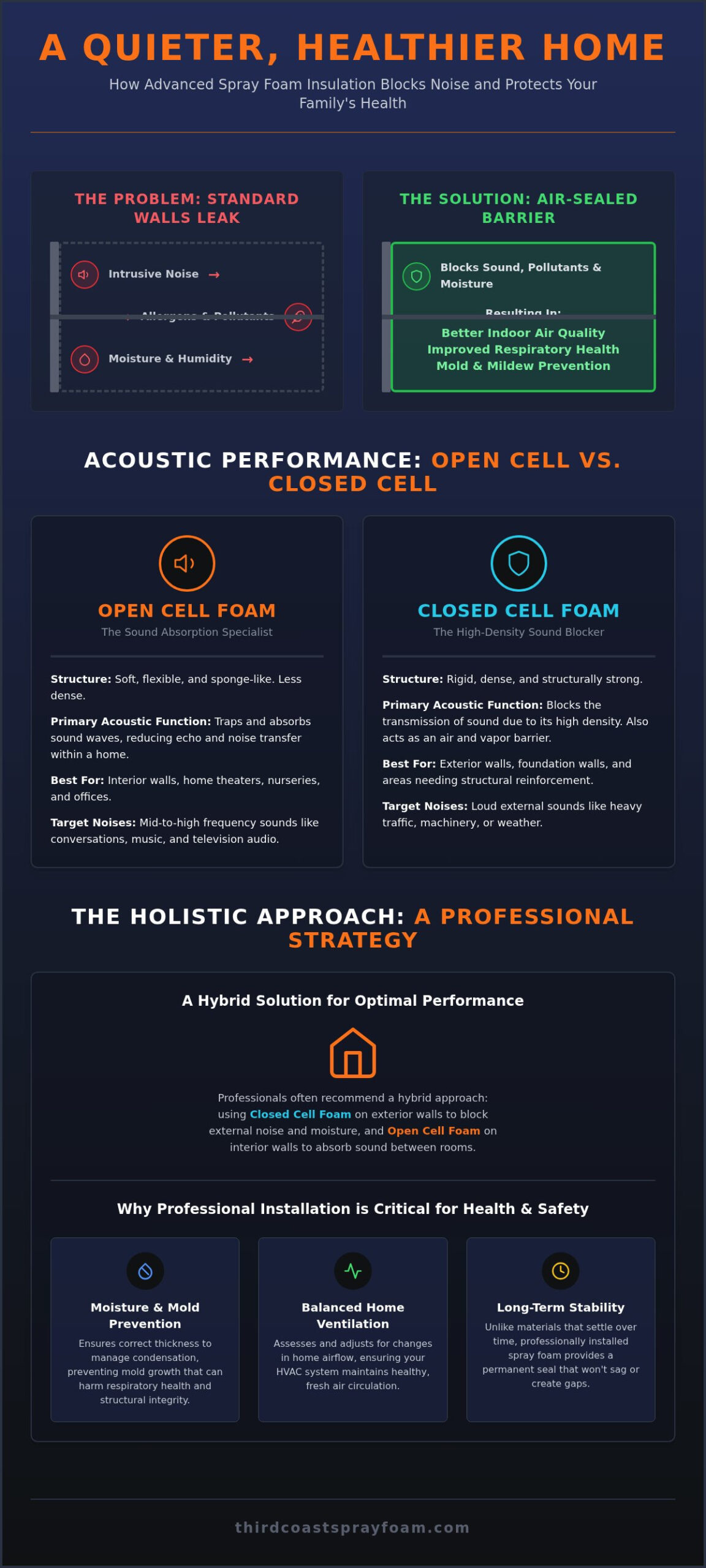
Choosing the right spray foam for soundproofing walls depends on the specific noise challenges you face in your West Michigan home. Open cell spray foam is often the gold standard for interior acoustic control. Its soft, sponge-like structure is specifically designed to trap sound waves, preventing them from echoing or passing through partition walls. Because it’s flexible and has a lower density, it excels at absorbing mid to high-frequency sounds like voices or music. It’s an ideal choice for home offices or nurseries where quiet is a priority.
Closed cell spray foam provides high density and superior air sealing. It’s best suited for blocking loud external noises, such as heavy traffic or industrial sounds. Its rigid structure also adds significant structural strength to your property. For many homeowners in Grand Haven or Kalamazoo, we suggest a hybrid approach. We use closed cell on exterior walls to act as a vapor barrier against Michigan’s humidity, while utilizing open cell for interior rooms to maximize sound absorption. This strategy protects your respiratory health by preventing mold growth in exterior cavities while ensuring a peaceful indoor environment.
Spray Foam vs. Traditional Blown-In Insulation for Walls
While blown-in insulation is an excellent retrofit for existing walls, it lacks the permanent airtight seal provided by foam. Over time, loose-fill materials can settle or shift. This creates “sound leaks” at the top of wall cavities that compromise your acoustic privacy. Unlike traditional materials, using spray foam for soundproofing walls ensures the barrier remains intact for the life of the structure. It won’t sag or create gaps that allow allergens or noise to bypass the barrier. This long-term stability makes it a superior investment for your home’s structural integrity. If you’re looking to upgrade your living space, consulting with a local specialist can help you determine the best configuration for your specific layout.
Professional Installation: Managing Moisture and Indoor Air Quality
Michigan’s climate presents unique challenges for any soundproofing project. High humidity levels combined with freezing winters can lead to interstitial condensation if your insulation isn’t applied with precision. When moisture becomes trapped within wall cavities, it creates a breeding ground for mold and mildew. This isn’t just a structural concern; it’s a direct threat to your family’s respiratory health. Professional installation ensures that spray foam for soundproofing walls is applied at the correct thickness to manage the dew point effectively, keeping your home dry and safe.
Creating an airtight room also requires a holistic view of your home’s mechanical systems. While a perfect seal blocks noise and outdoor pollutants, it also changes how your house breathes. We work to ensure your HVAC system remains balanced so that indoor air quality isn’t compromised by a lack of ventilation. We strictly avoid DIY kits because they often result in improper chemical mixing. This can lead to lingering odors and off-gassing that negatively impact the air you breathe. Our professional equipment ensures a perfect ratio every time, prioritizing your long-term wellness.
The Third Coast Approach to Quiet, Healthy Walls
We take pride in assessing the specific needs of older homes from Holland to Kalamazoo. Our team examines existing wall cavities to ensure a perfect acoustic and thermal seal that respects the original structure. By strategically integrating closed cell spray foam in areas prone to moisture, we maximize both silence and structural integrity. This comprehensive method ensures that using spray foam for soundproofing walls results in a home that is as healthy as it is quiet.
Secure a Quieter, Healthier Future for Your Home
A quiet home is a foundation for your family’s daily well-being. We’ve explored how a professional air seal effectively dampens intrusive noise while blocking the pathways for moisture and allergens. Choosing the right spray foam for soundproofing walls allows you to achieve superior acoustic privacy without compromising your indoor air quality. Our health-first approach ensures that every installation prevents the mold growth and respiratory triggers often associated with poor insulation. Since 2013, we’ve provided expert solutions from Grand Rapids to Muskegon, navigating Michigan’s unique climate with precision. You deserve a sanctuary that is as safe as it is silent. Take the first step toward a more secure and comfortable living environment today.
Get Your Free Soundproofing & Insulation Estimate in West Michigan
We look forward to helping you build a more peaceful and durable home for years to come.
Frequently Asked Questions
Is open cell or closed cell spray foam better for soundproofing?
Open cell spray foam is typically the best choice when using spray foam for soundproofing walls because its flexible, sponge-like structure traps airborne noise like voices and music. For exterior walls in Muskegon or Grand Haven, we often utilize closed cell foam to block louder traffic sounds and manage humidity. This dual approach ensures a quiet environment while preventing moisture traps that lead to mold.
Can I use spray foam to soundproof existing walls without tearing down drywall?
Applying spray foam for soundproofing walls usually requires open cavities to ensure the material expands correctly and creates a permanent seal. If your drywall is already in place, we often suggest professional blown insulation as a non-invasive alternative for existing homes in Holland or Allegan. While it lacks the airtight seal of foam, it still improves acoustic privacy and helps regulate indoor air quality.
Does spray foam insulation help with respiratory health?
Professional spray foam significantly improves respiratory health by creating a seamless barrier against outdoor allergens, pollutants, and dust. By sealing every microscopic gap, our installations prevent the infiltration of irritants into your Kalamazoo home. Additionally, this airtight seal manages moisture levels to prevent mold and mildew growth. This proactive approach ensures your indoor environment remains healthy and free from common respiratory triggers.
How much does it cost to soundproof a room with spray foam in West Michigan?
The investment for soundproofing a room in West Michigan varies based on the room size, the choice between open or closed cell foam, and the specific acoustic goals. Factors like wall accessibility and whether we need to perform insulation removal also play a role. We focus on providing durable, long-term solutions that enhance both your comfort and your home’s structural integrity from Grand Rapids to Lansing.
Disclaimer
Information provided is for general educational purposes. Individual needs and circumstances vary. Speak to an experienced professional to get the correct information for your situation.